Skip to content
Menu

Yacht Description

What Should You Know Before Booking a Superyacht on the French Riviera? yacht is a yacht.

Before you book a superyacht on the French Riviera, know 4 things: July berths in Monaco, Cannes, and St-Tropez are scarcer than the yachts themselves, the quote you receive is not the final price, the contract you sign can change your VAT rate, and calendars close around the big events months ahead. Get those right early and the rest of the week is the easy part.

This guide is written with our broker Nadja Asmus, who worked aboard charter yachts on this coast, including a 54m, before she started booking them, and who walks the major shows every year, Cannes and Monaco in 2025, Sanremo and Monaco planned for 2026. Here are the 9 things she checks before a client signs, and what we do about each one.

1. The berth is scarcer than the boat

In peak season there are more superyachts on this coast than places to put them. Monaco, Cannes, and St-Tropez all run short of visitor berths in July, and around event weeks the shortage gets extreme: in a Grand Prix week, the charter yachts with berths still available on the open market can be counted on one hand. A boat with nowhere to go is a different holiday than the one you pictured.

We treat the berth and the boat as one booking and secure both together. Where a port is full, we design the week around days at anchor, usually the better version anyway (see point 6).

2. The quote is not the price

A Riviera quote is the base charter fee only. On top of it come VAT at 20% on the fee, an APA, and a crew gratuity of 10 to 15% at your discretion. On a motor yacht the APA typically runs 30 to 40%: most quotes land at 30 to 35%, with 40% reserved for the high-end boats, while sailing yachts and catamarans run 20 to 25%. The APA is set by the itinerary and fuel, the wine list, and the extras, so 2 similar boats can carry different numbers. Our French Riviera yacht charter cost guide walks through real yachts with the full math, and what the APA covers and how the unspent balance comes back is its own short read.

When you compare quotes, compare the all-in total, not the base fee. We put the full breakdown in writing before you sign anything.

Broker insight

Clients don't like surprises when it comes to extra payments. I break the full cost down before anything is signed, the charter fee, the VAT, the APA, and what the standard gratuity is here, so the number you agree to is the number you pay.
Nadja Asmus Nadja Asmus Charter Broker

3. The right contract can halve your VAT

Most Riviera charters run on the standard MYBA contract, which carries French VAT at 20%. An ECPY transport contract, where the yacht legally carries you between fixed ports, can bring that to 10% on the mainland, 2.1% around Corsica, and 0% on a qualifying international voyage with a genuine documented stop abroad, for example a week that finishes in Italy. The trade is flexibility: the itinerary and the start and end ports are written into the contract, not every owner accepts it, and the French tax authorities do audit these contracts, so it only works when the plan genuinely qualifies as transport. Our France-to-Sardinia ECPY contract guide walks through a qualifying itinerary in full.

We check eligibility itinerary by itinerary and tell you plainly whether yours fits before anyone signs.

Broker insight

We have used the ECPY contract many times and the saving is real, including on fuel, which is paid outside the APA and is tax free. But the itinerary and the guest list are fixed once the contract is signed, so we only put a client on it when the plan is settled.
Daniel Asmus Daniel Asmus Owner, Charter Broker, Active CYBA Member, IYBA, ECPY

4. The best boats go early, but holds cost nothing

The Grand Prix weekend in early June, the film festival in May, and the Monaco Yacht Show in late September each pull the best boats off the calendar months ahead, and demand spills into the weeks on either side. Quotes expire fast in this market; in the Med we have missed a boat by 12 hours. What most first-time charterers do not know is that the hold system costs nothing: your broker can place a free option that keeps a yacht for you while you decide, typically for a few days, until another serious offer forces a decision.

Tell us the boat you are leaning toward and we place the hold the same day.

5. Event weeks run by different rules

Chartering for the Grand Prix or the film festival is not a normal cruising week. Yachts sell in minimum blocks of nights, much of the value is the dockside position rather than the miles, and some charters are effectively static, with the yacht as your grandstand and venue. Budgets behave differently too: at Grand Prix time, a client who cannot move up on price will find more or less nothing available. None of that is a reason to skip it, a berth in Port Hercule with the race running behind your deck is one of the great weeks in yachting, but it has to be bought as what it is.

We give you the real event-week economics up front; if the numbers do not fit, we build a better week on either side of the event.
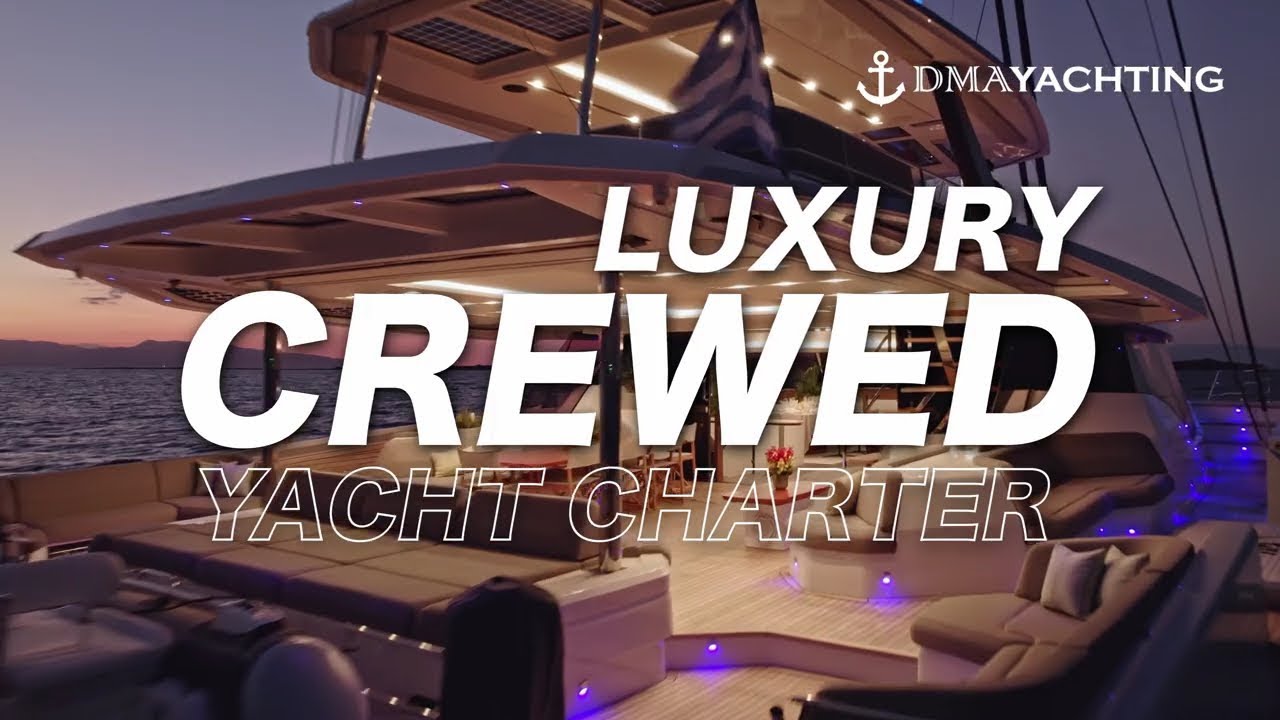

6. The best luxury here is at anchor, not in port

We plan most weeks with a few nights in the classic ports on purpose. Stepping off your own superyacht onto the quay in St-Tropez or Monaco is an experience, and the evening ashore could not be easier. But a dock mostly buys you convenience, and a town is something a great hotel can also give you.

Where a superyacht really glows is at anchor. The swim platform goes down and the toys go in the water. Dinner is served on the aft deck at water level, your music is the only music, and the sundeck cocktail party has the horizon for a backdrop instead of the boat next door. Lunch off Pampelonne with the tender running you in to the beach clubs, a sheltered evening in the bay at Villefranche, a swim off the Lerins islands: those are the days guests describe when they come home. Docking is convenient. At anchor is where the boat earns its keep.

So we build the split deliberately: a night or 2 on a classic quay for the theater, the rest out at anchor. Anchoring here is regulated (Pampelonne now runs a managed mooring zone), which is your captain’s problem, not yours. Browse the French Riviera superyachts available for charter and tell us which anchorages you want the week built around.

7. The crew matters more than you think

2 yachts can look identical on paper and deliver 2 completely different weeks, and the difference is the crew. A great Riviera crew works ashore as much as aboard: they get the table you could not, they know which beach club fits your group and when to arrive so the bay is not a queue, and they time the day so you are swimming while everyone else is waiting. Before you sign, ask who the captain and the chef are, how long the crew has run this coast together, and how the chef handles your table’s preferences.

We know many of these crews personally, and we debrief them after every charter, so our recommendation is based on how the boat actually runs, not on the brochure.

Broker insight

I worked aboard before I started booking, so I know what a strong crew looks like from the inside. After every charter I check in with the captain and crew as well as the client, and I only recommend a yacht once I have done my homework on both the boat and the people running her.
Nadja Asmus Nadja Asmus Charter Broker

8. Plan fewer miles than you think

St-Tropez to Monaco is a short coast. You can see the whole Riviera in a week with no cruising day longer than 2 to 3 hours, and many hops are under 1 hour. Adding Corsica to the same week means a long open-water crossing each way, extra fuel, often a relocation fee, and it sacrifices the thing you came for: slow mornings at anchor and long lunches ashore. A week that covers the coast without ever feeling rushed looks like our 7-day French Riviera itinerary.

If Corsica matters to you, we would build it as its own week rather than fold it into this one.

9. June and September beat July and August

The same yacht, the same coast, and typically 25 to 30% off the high-season rate: that is June and September on the Riviera. The sea stays warm, around 23 to 24C, into September, the ports have room again, the beach clubs take a booking on shorter notice, and the anchorages you share with a crowd in August you can have nearly to yourself. July and August have the energy and the event calendar, but if your dates are flexible, mid-season is the better charter for less money.

Tell us your earliest and latest possible weeks and we will show you what the same budget buys in each.

People also ask

How much over the base price should I budget for a French Riviera superyacht charter?

Budget roughly 60 to 75% on top of the base charter fee: 20% VAT, an APA of 30 to 40% on a motor yacht, and a crew gratuity of 10 to 15% at your discretion. A EUR 150,000 charter therefore typically lands between EUR 240,000 and EUR 260,000 all in. Our cost guide walks through the same math on real yachts.

How far in advance should you book a superyacht on the French Riviera?

For July, August, or any event week, book 6 to 12 months ahead; the strongest boats for next summer start going under contract the September before. June and September dates leave more room, but the best crews still book early. If you are undecided, a free hold keeps a yacht for you while you commit, typically for a few days, until another serious offer forces a decision.

Can the VAT on a French Riviera yacht charter be reduced?

Sometimes. The standard rate is 20%, but on a qualifying ECPY transport contract it can drop to 10% on the mainland, 2.1% around Corsica, or 0% on a genuine international itinerary, for example one finishing in Italy. The itinerary is fixed in the contract and not every yacht offers it, so we check eligibility before you commit to that route.

What is the best month to charter a superyacht on the French Riviera?

June and September. Rates run roughly 25 to 30% below high season, the sea stays warm into late September, and the ports and anchorages are far less crowded. July and August deliver the peak scene and the event calendar, but they cost more and demand much earlier booking.

Specifications

Type
Yacht
Begin a brief

Tell us the week you have in mind.

We respond within four hours during business hours, with yacht options matched to your guests, dates, and destination.

Begin a brief

Tell us the week you have in mind.

We respond within four hours during business hours, with yacht options matched to your guests, dates, and destination.

Yacht Description

How Much Do You Tip the Crew on a French Riviera Yacht Charter? yacht is a yacht.

The crew gratuity on a crewed French Riviera charter is 10 to 15 percent, calculated on the base charter fee alone. You decide the figure at the end of the week, and nobody on board is allowed to ask you for it.

Under the MYBA terms that Riviera bookings usually run on, a gratuity is left to the charterer, and MYBA is explicit that it must never be requested. A captain who asks you for one is outside the guidelines the booking runs on.

Most of our clients budget 10 percent from the start and settle the exact number on the last morning.

Quick Answer

  • How much: 10 to 15 percent of the base charter fee, before VAT and before the APA
  • Who gets it: one amount to the captain, who on most boats shares it equally across the crew
  • When: disembarkation morning, at the end of the week
  • How: cash in euros, a transfer we set up before you board, or your own unspent APA balance redirected to the crew at your instruction

For the 30 second version, see our short answer on tipping yacht crew on the French Riviera.

Superyacht WAVE al fresco dining

How Much Should You Tip on a French Riviera Charter?

The number that matters is the base charter fee, the headline weekly rate on your contract. VAT, the APA, delivery fees and anything you spent ashore all sit outside the calculation.

That matters more here than in most places, because the Riviera APA on a motor yacht runs 30 to 40 percent of the fee, and French charter VAT is 20 percent on top of it.

On a EUR 150,000 week, which is where a lot of our Riviera bookings land, 10 percent is EUR 15,000 and 15 percent is EUR 22,500.

Now price the mistake. Put a 35 percent APA and 20 percent VAT on that same EUR 150,000 fee and the invoice total reads about EUR 232,000. Tip 10 percent on the invoice rather than the fee and you hand over about EUR 23,000 instead of EUR 15,000, so the wrong base costs you roughly EUR 8,000 for nothing.

We treat 10 percent as the working default and 15 percent as the number for a week the crew genuinely made: the chef who rebuilt a menu around one guest’s allergy, the deckhand who had the tender waiting every time you looked up.

The 10 to 15 band is what we see on Riviera bookings, not a rule anyone publishes. MYBA’s own position is that the amount is the charterer’s alone and stays confidential.

Our French Riviera charter cost guide sets the gratuity beside the fee, the APA and the tax.

Broker insight

Tipping in the Med is 10 to 15 percent, and the Caribbean is 15 to 20 percent. It is the client's discretion either way, but that is the norm.
Chris de Kock Chris de Kock Charter Broker, Sales Broker, Active CYBA Member

How Do You Pay the Tip?

3 routes work here: cash in euros, which is traditional and still the most common, a transfer arranged through us before you board, which is the practical one once the sum gets large, or your own unspent APA balance sent on to the crew at your instruction.

Cash sounds simple until you price it. A 10 percent gratuity on a EUR 150,000 week is EUR 15,000 in notes, and no cash machine in Antibes or Cannes produces that on the Friday of an August week.

Carrying it in has its own rules. Anyone entering or leaving the EU with EUR 10,000 or more in cash must declare it, France applies the same threshold to cash arriving from other EU countries, and the declaration asks you to state where the money came from and what it is for. Fail to declare and the fine runs to half the sum.

That third route is the one that solves the last morning. If your APA has money left, you can tell the captain to put that toward the gratuity and top up the difference. The APA is not funding the tip, it is your own unspent money going a different way.

Tell us early if you plan to tip in cash and we will tell you what is realistic. If it is not, we set up the transfer: you instruct the funds before the charter, and they are released to the captain after you disembark. That also buys you a few days after the week to settle the figure.

Do not wire money to individual crew members’ personal accounts, and do not put it on a card. A card payment creates an accounting problem for the boat, and peer-to-peer apps routinely will not reach crew banking outside the country the app serves.

Broker insight

The tip goes to the captain at the end of the week, cash or a transfer we arrange beforehand, and he splits it across the whole crew, including the engineer and the deckhands you barely saw. Tell us in advance which way you would rather do it and we will have it ready, so it is not something you are solving on the last morning.
Martina Asmus Martina Asmus Owner, Charter Broker, Active CYBA Member, IYBA, ECPY
Antibes old town seen from the water at night

Who Do You Hand It To, and How Is It Split?

One amount, to the captain, on the last morning. On most boats he divides it in equal shares among everyone who worked the week.

Equal is the modern norm. The engineer you spoke to twice carried the same week the chef did, and on most Riviera boats the split does not follow rank. Some yachts still weight it by seniority, which is the captain’s call and not something we can see from ashore. On larger yachts, handing it over with the purser present is a courtesy to both of them. For everything beyond the envelope, our crewed yacht charter etiquette guide covers the rest of the week.

Some brokers will tell you never to split it. Our view is that it is your money. If one crew member made your week, give them something separately, keep the main amount as one envelope to the captain, and treat the extra as an extra.

What Happens on the Last Morning?

Disembarkation morning, usually over breakfast or on the passerelle as you leave.

It is a busier hour than guests expect. The crew are already stripping cabins for the next charter, your bags are on the dock, and a car is waiting. Hand the envelope over, say what you liked, and go.

The captain will not open it in front of you, so do not read the lack of a reaction as a verdict on your number.

Why Is Tipping Lower on the Riviera Than in the Caribbean?

If your last charter was in the Caribbean, the Riviera figure will look thin. It should.

The driver is who is tipping, not what the rate includes. Caribbean crews work a market shaped by American habits, and brokers there record US guests at 15 to 20 percent against European guests at 10 to 15 on the same yachts in the same water. The Riviera sits at the European end of that.

Boat type moves it a little. A BVI crewed catamaran is usually all-inclusive, so food and fuel sit inside the rate you tip on, while here they sit in the APA and outside it. Note that a St Barts superyacht runs on MYBA terms with an APA exactly like the Riviera, so do not treat the whole Caribbean as all-inclusive.

The percentage is lower here and the money is lower here. Do not import the Caribbean number.

What If the Week Did Not Go Well?

Say it on board, not in the envelope.

A quiet number well under what you planned tells the captain nothing. He cannot fix what he was never told, and the whole crew absorbs one person’s failure.

It also weakens the case afterward. When we take a complaint to the yacht’s central agent, what the guests actually said and did at the end of the week is part of what gets weighed. So call your broker while you are still aboard. Most of what goes wrong on a charter is fixable on day 3 and unfixable on day 7.

Broker insight

It is the client’s money and it is their call. Every contract mentions a gratuity, and every one of them says it is discretionary. If something genuinely went wrong and a charterer wants to give less than the guideline, that is entirely their right.
William Mc Nally William Mc Nally Charter Broker, Associate CYBA Member

What We Recommend

Budget 10 percent of the base fee while you are building the total cost of the week, and leave headroom to 15 in case the crew earn it. Decide the real figure on the last morning, when you know which of the two it was.

Tell us at quote stage whether you want the gratuity shown as a line in your breakdown or left out. We will do either, and we never fold an assumed percentage into a total without saying so.

If this is your first crewed week, our guide to how to charter a yacht on the French Riviera covers the rest of the process.

People also ask

Is the tip taken out of the APA?

Not automatically. The gratuity is separate money you decide at the end of the week, and it is calculated on the base charter fee rather than on the APA. If your APA has money left, you can tell the captain to put that toward the tip and top up the difference, but nobody should ever deduct it for you. Our French Riviera APA guide covers how the two sit side by side.

Do I still tip if the contract mentions a gratuity percentage?

It is a recommendation, not a charge. MYBA is explicit that a charterer is under no obligation and that a gratuity must never be requested when the final account is settled. If one has appeared on your invoice as a due amount, tell us.

What currency should I bring?

Euros. Riviera crews are paid and banked in euros, and dollars leave them changing a large cash sum in a French bank. If euros in cash are not practical, use the transfer route.

Do I tip the captain separately?

No. One amount to the captain covers the whole crew, himself included, and he normally takes an equal share. Tipping him separately on top cuts against the split he is about to make.

{"@context":"https://schema.org","@type":"FAQPage","mainEntity":[{"@type":"Question","name":"Is the tip taken out of the APA?","acceptedAnswer":{"@type":"Answer","text":"Not automatically. The gratuity is separate money you decide at the end of the week, and it is calculated on the base charter fee rather than on the APA. If your APA has money left, you can tell the captain to put that toward the tip and top up the difference, but nobody should ever deduct it for you. Our French Riviera APA guide covers how the two sit side by side."}},{"@type":"Question","name":"Do I still tip if the contract mentions a gratuity percentage?","acceptedAnswer":{"@type":"Answer","text":"It is a recommendation, not a charge. MYBA is explicit that a charterer is under no obligation and that a gratuity must never be requested when the final account is settled. If one has appeared on your invoice as a due amount, tell us."}},{"@type":"Question","name":"What currency should I bring?","acceptedAnswer":{"@type":"Answer","text":"Euros. Riviera crews are paid and banked in euros, and dollars leave them changing a large cash sum in a French bank. If euros in cash are not practical, use the transfer route."}},{"@type":"Question","name":"Do I tip the captain separately?","acceptedAnswer":{"@type":"Answer","text":"No. One amount to the captain covers the whole crew, himself included, and he normally takes an equal share. Tipping him separately on top cuts against the split he is about to make."}}]}

Specifications

Type
Yacht
Begin a brief

Tell us the week you have in mind.

We respond within four hours during business hours, with yacht options matched to your guests, dates, and destination.

Yacht Description

Which Yacht Suits Your Group? Family, Celebration, and Corporate Charters on the French Riviera yacht is a yacht.

Quick Answer

The right yacht for your South of France charter comes down to three things: how many people sleep aboard, how the cabins are laid out, and which port she is berthed in. At DMA Yachting we check all three against your group before sending a single option, because a yacht that is ideal for four couples can be the wrong boat entirely for a family with three children.

  • Guest count tells you very little on its own. Two yachts can both sleep 10 across 5 cabins and suit completely different groups.
  • For families, the cabin mix decides it: twin cabins and pullman berths, not five double beds.
  • For celebrations, deck and swim platform space matter more than cabin count.
  • For corporate hospitality, the format comes first. Cruising charters cap at 12 guests. Static dockside events do not.
Superyacht ARTISAN master cabin

Aboard ARTISAN. Cabin layouts vary far more than guest counts suggest.

Guest Count Is the Wrong Place to Start

Almost every inquiry opens with a number. Ten of us, twelve of us, eight adults and four kids. It is the natural way to think about it, and it is the least useful number we get.

There is one hard limit worth knowing. A crewed yacht on a standard commercial charter license can take a maximum of 12 guests while cruising. That limit applies to a 50 metre yacht just as it does to a 24 metre one. If your group is bigger than 12 and you want to be on the water together, the answer is usually two yachts running in tandem or a static dockside charter, which we cover in our guide to corporate yacht charter at Cannes Lions and MIPIM.

Below that cap, the number stops being the deciding factor. The layout takes over.

For Families, the Cabin Mix Is the Whole Decision

This is where we see the most disappointment, and it is entirely avoidable.

Two yachts can advertise the same 10 guests in 5 cabins and offer completely different weeks. The question is what is in those cabins.

ICONA is a 30 metre Riva chartering from 135,000 euros a week. She sleeps 10 across 5 cabins, and every one of those cabins has a double bed. She is a beautiful yacht and she is built for five couples. Put a family with three children aboard and you are splitting people up in ways nobody enjoys.

RARE GEM is a 28 metre Custom Line from 95,000 euros. Same headline: 10 guests, 5 cabins. But her layout runs a master, two queen VIP cabins, and two twin cabins. One of the twins carries a pullman berth, so two children share one cabin instead of needing a fifth double, and the other twin converts to a double. Children get their own cabins with their own beds. Nothing has to be negotiated.

Broker insight

When we walk yachts at the shows we take notes on the cabins, not just the deck. For families we are looking for the boats built with children in mind: bunk berths, a cabin next door to the parents rather than a deck away, somewhere to keep the toys. For couples or friends sharing it is the opposite question, whether the cabins are equal enough that nobody feels they drew the short straw. Tell us who is sharing with whom and we will find the layout that works.
Carina Isenberg Carina Isenberg Charter Broker
Jetski

ICONA

From €135,000 / week
5 cabins
99 ft
Riva
10 guests
5 crew
Built: 2025
View

RARE GEM

From €95,000 / week
5 cabins
93 ft
Custom Line
10 guests
5 crew
Built: 2022
View

Same guest count, same cabin count, 30,000 to 40,000 euros apart depending on the season, and only one of them works for a family. That is why we ask who is traveling before we ask how many.

Twin cabins and pullman berths are also scarcer than most people expect on the Riviera, which is the practical reason to start early rather than late. There are only so many family-shaped yachts in any given week, and in July and August they go first.

The cabin plan gets everyone aboard comfortably. The crew decides how the week feels. (First time chartering here? Nadja walks through what to know before booking a superyacht on the French Riviera.)

On a family charter that usually means a chef who will run an early dinner for the children and a proper one for the adults later, and a deckhand whose afternoon goes on the tender and the water toys rather than the paperwork. Crews differ more than the yachts do here. Some genuinely enjoy having children aboard and some simply tolerate it, and that is the part we know from being on the boats and from placing guests with those crews season after season.

That is not theory. When we walked EVEREAST at the Sanremo charter show, the note we took was that her crew are used to stepping in as nannies and that a cot can be added for the littlest guests, which is a different proposition from a yacht where children are merely allowed. SUI GENERIS goes further again: her VIP cabin has a separate children’s room off it, plus an extra berth for a nanny.

For Celebrations and Friend Groups, Deck Space Beats Cabin Count

When the group is all adults, the cabins matter far less. Everyone gets a double, and the week is lived on deck.

What we look at instead is the shape of the outdoor space: how big the aft deck is, whether the swim platform is usable for a whole afternoon, whether the flybridge seats everyone at once or splits the group in two. A yacht with a slightly smaller interior and a generous beach club is usually the better call for this group than the reverse.

Berth location does more work than people expect here. If the evenings are the point of the trip, being alongside in Cannes or Antibes rather than at anchor changes the whole rhythm of the week. Our guide to starting in Antibes or Cannes goes through that trade-off properly.

The same show notes are where the celebration boats separate themselves. On HATT MILL the back deck carries a full dining table built for special-occasion dinners, and the top deck opens out in every direction with a lounge and a jacuzzi. ANJELIF puts a bar, sunbeds and a jacuzzi on the sundeck, and her bow doubles as a dance floor or an outdoor cinema. Neither of those shows up anywhere in a cabin count.

Beach club aboard the superyacht ARTISAN

Aboard ARTISAN. Deck and beach club space is what an adult group uses.

For Corporate Groups, Decide the Format First

Corporate is the one case where the yacht is almost the last decision.

Static or cruising is the first question, because it sets the guest limit, the berth, the permit and the budget. Nearly every corporate charter we arrange around the Riviera event calendar is static, because the format matches how those events are used: client hosting and meetings at a fixed berth, not a day at sea.

We have written that up in full, including the Vieux Port and Port Canto trade-off and what it costs, in the Cannes Lions and MIPIM guide.

What About Catamarans?

They are the obvious answer for families, and they are hard to find on the South of France coast. The Riviera fleet is overwhelmingly motor yachts, and the handful of high end catamarans that do charter these waters book a long way ahead. We go through the reasons and the realistic alternatives in why catamarans are hard to find on the French Riviera.

How We Shortlist Yachts for Your Group

In practice we ask four things before shortlisting anything:

  • Who is traveling, and their ages
  • Whether the week is built around being on the water or ashore in the evenings
  • Which airport you fly into
  • What you want the days to feel like

Those four answers usually cut the realistic list to a handful of yachts. Sending you fifty listings would be easier for us and far less useful for you.

Tell us those four things and we will come back with a short list of yachts whose layouts fit your group, with cabin plans and real availability checked before you see them. You can also start from our French Riviera yacht charter page or talk to our South of France team directly.

People also ask

Which yachts are most suitable for family trips on the French Riviera?

At DMA Yachting we look for twin cabins and pullman berths rather than an all-double layout. Guest count is a poor guide: a 10 guest yacht with five double cabins suits five couples, while a 10 guest yacht with two twin cabins suits a family with children. Tell us the ages and who is sharing with whom, and we will come back with the layouts that work rather than the ones that only look right on paper.

Can we charter a yacht for a corporate event in Cannes?

Yes, and DMA Yachting arranges these routinely during Cannes Lions and MIPIM. The important decision is static versus cruising: a cruising charter caps at 12 guests, while a static dockside charter can host anywhere from 15 to several hundred depending on the yacht and the port permit. We cover the permits, berths and costs in our Cannes Lions and MIPIM guide.

Are there luxury catamaran charters available in France?

Yes, but far fewer than in the Caribbean or Croatia. The French Riviera fleet is mostly motor yachts, so the high-end catamarans that do charter here are booked early, particularly for July and August. We go through why in our piece on catamaran availability on the French Riviera.

What should I know before booking a superyacht in the French Riviera?

The advertised weekly rate is only part of the budget. On top of the charter fee you should expect APA, typically 30 to 40 percent on Riviera motor yachts, plus VAT and crew gratuity. Our French Riviera charter cost guide breaks down what a realistic total looks like.


{"@context":"https://schema.org","@type":"FAQPage","mainEntity":[{"@type":"Question","name":"Which yachts are most suitable for family trips on the French Riviera?","acceptedAnswer":{"@type":"Answer","text":"At DMA Yachting we look for twin cabins and pullman berths rather than an all-double layout. Guest count is a poor guide: a 10 guest yacht with five double cabins suits five couples, while a 10 guest yacht with two twin cabins suits a family with children. Tell us the ages and who is sharing with whom, and we will come back with the layouts that work rather than the ones that only look right on paper."}},{"@type":"Question","name":"Can we charter a yacht for a corporate event in Cannes?","acceptedAnswer":{"@type":"Answer","text":"Yes, and DMA Yachting arranges these routinely during Cannes Lions and MIPIM. The important decision is static versus cruising: a cruising charter caps at 12 guests, while a static dockside charter can host anywhere from 15 to several hundred depending on the yacht and the port permit. We cover the permits, berths and costs in our Cannes Lions and MIPIM guide."}},{"@type":"Question","name":"Are there luxury catamaran charters available in France?","acceptedAnswer":{"@type":"Answer","text":"Yes, but far fewer than in the Caribbean or Croatia. The French Riviera fleet is mostly motor yachts, so the high-end catamarans that do charter here are booked early, particularly for July and August. We go through why in our piece on catamaran availability on the French Riviera."}},{"@type":"Question","name":"What should I know before booking a superyacht in the French Riviera?","acceptedAnswer":{"@type":"Answer","text":"The advertised weekly rate is only part of the budget. On top of the charter fee you should expect APA, typically 30 to 40 percent on Riviera motor yachts, plus VAT and crew gratuity. Our French Riviera charter cost guide breaks down what a realistic total looks like."}}]}

Specifications

Type
Yacht
Begin a brief

Tell us the week you have in mind.

We respond within four hours during business hours, with yacht options matched to your guests, dates, and destination.

Yacht Description

APA on a French Riviera Yacht Charter: What It Covers and How You Get the Balance Back yacht is a yacht.

The APA, or Advance Provisioning Allowance, is the running-cost fund on a crewed charter: you pay it before boarding, the captain spends it on fuel, food, drinks, and berths, and whatever is left unspent is refunded to you afterward. On the French Riviera it is usually 30 to 40 percent of the charter fee on a motor yacht, or 20 to 25 percent on a sailing yacht or catamaran, which burn far less fuel. Your contract states the exact figure.

Getting any unspent APA back is not something you should have to chase. The refund is written into your charter contract, and we stay with the settlement until the money is in your account.

Quick Answer

  • The APA prepays your on-board expenses. It is not a fee, and it is not the security deposit.
  • The captain administers it and keeps a running expense log you can ask to see at any point.
  • At the end, the account is reconciled with the captain: you review an itemized breakdown, sign it, and only the unspent balance is refunded, by bank transfer or in cash on the day.
  • We check the final account against your route and the yacht’s known fuel burn before you accept it.
Superyacht RAJA 2 bridge deck al fresco dining

What Does the APA Cover, and What Does It Not?

The APA pays for everything the yacht consumes while working for you: fuel for the engines, generator, and tenders, provisioning and drinks from your preference sheet, berthing and port charges, and local taxes along the way. A case of Provence rosé brought aboard in St-Tropez mid-week comes out of it too. You never reach for a card on board.

It does not cover the charter fee, VAT on that fee, or delivery charges if the yacht repositions to meet you. It also does not cover the crew gratuity, which is entirely your decision at the end and is worked out on the base charter fee, not the fee plus APA.

Here, 2 lines dominate the account: fuel, priced dockside well above anything ashore, and berthing, since a summer night in Monaco, St-Tropez, or Cannes during a major event is some of the most expensive real estate afloat.

A week hopping between marquee ports spends faster than one mixing harbors with nights at anchor off the Lérins islands, and we will tell you which week your budget is buying before you sign.

How Much APA Is Normal on the French Riviera?

The APA on a French Riviera charter is typically 30 to 40 percent of the charter fee for motor yachts, which make up most of the Riviera fleet. Most quotes land at 30 to 35 percent, with 40 percent on high-end charters. Only sailing yachts and catamarans go as low as 20 to 25 percent.

Those are the real numbers, not the friendliest ones. A lower figure reads well on a comparison page and then breaks the moment a genuine quote arrives, so we give you the honest percentage and explain what sets it. Older, thirstier hulls can justifiably run higher, while a few modern fuel-efficient motor catamarans are quoted lower, and we point them out when the budget is tight.

On a EUR 200,000 Riviera week at 35 percent, that is EUR 70,000 held for your expenses. It sounds like a lot until you price a full tank and 4 nights of high-season berths.

In our experience the APA usually lands close to what was quoted, and often leaves a little to come back to you at the end. We have been pricing these weeks for a long time, so unless the extras you add are genuinely out of the ordinary, you can plan on the figure we suggest at the start.

What moves the number is fuel. A long week of port-to-port cruising uses far more than a week spent mostly at anchor, and older hulls drink more than newer ones. We factor that into the percentage before you sign, so the figure holds.

Broker insight

We are very upfront about the APA and what percentage to set it at, depending on what you want on board. It follows your itinerary, how far you cruise and the fuel that takes, but also the wine list and the extras you would like waiting for you. We would rather set it honestly at the start than surprise you later.
Nadja Asmus Nadja Asmus Charter Broker

Where Does Your Money Sit During the Charter?

Under the MYBA agreement used for most Riviera bookings, the APA is paid with your final balance, usually 4 to 6 weeks before boarding, and your contract states the exact date. It is passed to the captain before you step on, and from that moment it is your money in the captain’s care.

The captain provisions, settles port and provisioning invoices, keeps receipts for everything that has one, and maintains a running log.

Ask for the running balance at any point and you should get a current figure, including a close estimate of fuel used so far. Good crews volunteer it every couple of days, and if spending tracks hot the captain flags it early, so a top-up, if ever needed, is a planned conversation rather than a surprise.

Marina in Cannes

How Is the APA Reconciled at the End?

The reconciliation happens on the final evening or last morning: the captain presents the APA account, a category-by-category breakdown of fuel, provisioning, beverages, berthing, and sundries, backed by the week’s receipts and supplier invoices where they exist. You review it together, query anything unclear, and both sign.

If you spent less than you paid in, the difference is yours. Small balances are often handed back in cash on the spot; larger ones return by bank transfer, usually routed through the broker or stakeholder account.

Our own process runs alongside that. On the last day of every charter, your DMA broker requests the final signed APA report with all receipts from the yacht’s managers, checks what was spent and what must come back, then agrees the refund and keeps you posted until the money lands.

There is no industry-mandated refund deadline, which is exactly why a broker matters. We push for the itemized account within days of disembarkation and chase the refund until it lands, so you do not have to.

Some guests ask for part of the refund to be redirected to the crew as the gratuity, which is a clean way to do it, but always your call.

One line usually has no receipt behind it: fuel. On most motor yachts it is a calculated entry, not a pump invoice. Our broker John Boullin has seen exactly how that works on an APA account:

Broker insight

They just calculate the hours run for each day and use a standard fuel rate, say 350 L/h.
John Boullin John Boullin Charter Broker

That is standard practice, not a red flag. It also makes the check simple arithmetic: the hours logged times the agreed rate should match the week you actually had. We run that math for you before you accept the account.

How Do We Keep the APA Straightforward?

Three things make an APA feel effortless: a percentage set correctly at the start, an account you can follow during the week, and a refund that arrives without chasing. We handle all 3.

We set the percentage honestly for the yacht you are on, even when a competitor quotes a lower one to look cheaper, and we stay with the settlement until your refund lands.

Because we know the distances between Riviera ports and the burn rates of the yachts we book, we can verify a fuel line against the route you actually sailed, and raise anything that looks off with the captain or the management company for you.

Our Recommendation

Treat the APA as part of the real price of the week. When you compare quotes, compare charter fee plus VAT plus APA, and treat an unusually low APA as a question worth asking, not a saving.

If your route reaches beyond French waters, contract type can change the tax picture; our note on chartering from France to Sardinia under an ECPY contract shows how much that can matter, and we advise on it case by case.

For the full budget picture, see our French Riviera yacht charter cost guide, and if you are earlier in the process, start with our guide to chartering a luxury yacht on the Riviera. Tell us which week you are pricing and we will set the APA where it belongs and stand behind the account at the end.

People also ask

Is the APA the same as a security deposit?

No. A security deposit protects the owner against damage. The APA is your own spending money, administered by the captain, and only the unspent part comes back. They are separate lines in the contract.

Do I pay VAT on the APA?

Not on the APA amount as such. French VAT applies to the charter fee, at the current standard rate of 20 percent for a typical Riviera charter, with relief possible for time outside EU waters. Purchases inside the APA carry their own VAT where it is not already paid at source.

Can I top up the APA mid-charter?

Yes. The captain raises it early, and the difference is settled by card, cash, or transfer against a signed invoice. When the percentage was set honestly at the start, it rarely comes to that.

Is the crew tip taken out of the APA?

Not automatically. It is separate money, entirely at your discretion and calculated on the base charter fee, though you can ask for part of your refund to be passed to the crew. Full detail in our guide to tipping the crew on a French Riviera charter.

How do I get my unspent APA back?

You do not have to do anything. At the end of the charter the captain goes through the account with you, and whatever is left is returned, usually in cash on the spot for smaller amounts or by bank transfer for larger ones. It is in your contract, and we follow it up until the money reaches you.

{"@context":"https://schema.org","@type":"FAQPage","mainEntity":[{"@type":"Question","name":"Is the APA the same as a security deposit?","acceptedAnswer":{"@type":"Answer","text":"No. A security deposit protects the owner against damage. The APA is your own spending money, administered by the captain, and only the unspent part comes back. They are separate lines in the contract."}},{"@type":"Question","name":"Do I pay VAT on the APA?","acceptedAnswer":{"@type":"Answer","text":"Not on the APA amount as such. French VAT applies to the charter fee, at the current standard rate of 20 percent for a typical Riviera charter, with relief possible for time outside EU waters. Purchases inside the APA carry their own VAT where it is not already paid at source."}},{"@type":"Question","name":"Can I top up the APA mid-charter?","acceptedAnswer":{"@type":"Answer","text":"Yes. The captain raises it early, and the difference is settled by card, cash, or transfer against a signed invoice. When the percentage was set honestly at the start, it rarely comes to that."}},{"@type":"Question","name":"Is the crew tip taken out of the APA?","acceptedAnswer":{"@type":"Answer","text":"Not automatically. It is separate money, entirely at your discretion and calculated on the base charter fee, though you can ask for part of your refund to be passed to the crew. Full detail in our guide to tipping the crew on a French Riviera charter."}},{"@type":"Question","name":"How do I get my unspent APA back?","acceptedAnswer":{"@type":"Answer","text":"You do not have to do anything. At the end of the charter the captain goes through the account with you, and whatever is left is returned, usually in cash on the spot for smaller amounts or by bank transfer for larger ones. It is in your contract, and we follow it up until the money reaches you."}}]}

Specifications

Type
Yacht
Begin a brief

Tell us the week you have in mind.

We respond within four hours during business hours, with yacht options matched to your guests, dates, and destination.

Yacht Description

Which Airport Should You Fly Into? Nice vs. Cannes-Mandelieu vs. Toulon-Hyères yacht is a yacht.

.vc_custom_sf20260719001{padding-bottom: 40px !important;} .vc_custom_sf20260719005{padding-bottom: 40px !important;} .vc_custom_sf20260719003{margin-top: 40px !important;} .vc_custom_sf20260719004{padding-top: 40px !important;padding-right: 40px !important;padding-bottom: 40px !important;padding-left: 40px !important;} .vc_custom_sf20260719002{padding-bottom: 20px !important;} .vc_custom_sf20260719010{margin-top: 40px !important;} .vc_custom_sf20260719011{padding-top: 40px !important;padding-right: 40px !important;padding-bottom: 40px !important;padding-left: 40px !important;} .vc_custom_sf20260719012{padding-bottom: 40px !important;} .vc_custom_sf20260719009{padding-bottom: 20px !important;} .vc_custom_sf20260719006{background-color: #0B385F !important;} .vc_custom_sf20260719007{margin-top: 60px !important;margin-bottom: 60px !important;} .vc_custom_sf20260719008{padding-top: 10px !important;padding-bottom: 25px !important;}

For most French Riviera yacht charters, we recommend flying into Nice Côte d’Azur Airport. It is the only one of the three realistic options with year-round scheduled international service, and it sits within a reasonable transfer of every embarkation point on this coast.

The two exceptions worth knowing about: Cannes-Mandelieu if you are flying private and starting your charter in Cannes, and Toulon-Hyères if your charter starts in St Tropez, where Nice becomes a much longer drive than most clients expect.

Nice, Cannes-Mandelieu, and Toulon-Hyères each serve a different type of French Riviera charter start.

Quick Answer: Which Riviera Airport Should You Fly Into?

Airport Best for Transfer time to embarkation Aircraft type Main caution
Nice Côte d'Azur (NCE) Most charters, any start point ~25 min to Antibes, ~30 min to Cannes, ~1h45 to St Tropez Commercial and private Longest transfer for a St Tropez start
Cannes-Mandelieu (CEQ) Private/GA clients starting in Cannes ~10-15 min to central Cannes Private and business jets only No scheduled commercial flights; more weather-sensitive
Toulon-Hyères (TLN) St Tropez starts Roughly 45-60 min, depending on traffic Limited commercial plus private/VIP Fewer daily flight options than Nice

Nice Côte d’Azur Airport: The Default Choice for Most Charters

We recommend Nice first because it is genuinely built for this: it is the largest airport on the Riviera, it takes every aircraft type from commercial jets to private aviation, and it has its own dedicated private-jet terminal with VIP lounges. If you are flying in from London, Geneva, New York, or the Middle East on a scheduled service, Nice is your only real option among the three, since neither Cannes-Mandelieu nor Toulon-Hyères runs meaningful scheduled international routes.

It also holds up well against every embarkation point except one. Nice is about 25 minutes to Antibes and about 30 minutes to Cannes, which matches what our destination pages already say about those two ports. St Tropez is the outlier: Nice is roughly 107 km away, which usually runs closer to an hour and 45 minutes by road once you factor in the coast road through Sainte-Maxime. If your charter starts in Antibes, Cannes, or Monaco, Nice is the easy right answer. If it starts in St Tropez, keep reading before you book.

Flying Into Nice for a Monaco Charter: Helicopter or Coastal Drive?

If Monaco is your start point, stop, or event base, Nice still makes sense, but how you get from the airport to the yacht is its own decision. A helicopter transfer between Nice and Monaco takes about 7 minutes, runs on a near-shuttle schedule with departures roughly every 30 minutes from 8am, and starts at around €195 per person. The alternative is a 30-45 minute coastal drive, which is perfectly workable but loses the point if your priority is getting onboard fast, especially during a Grand Prix or Monaco Yacht Show week when road traffic around the principality gets heavy. We’d book the helicopter for any group that wants the week to start the moment they land, and take the car when the group is larger, has more luggage, or simply doesn’t mind the drive.

Luxury Yacht Marina, Port Hercules, Monaco, French Riviera

Port Hercules, Monaco: about 7 minutes from Nice by helicopter, or a 30-45 minute coastal drive.

Cannes-Mandelieu Airport: The Private/GA Shortcut for Cannes Starts

Cannes-Mandelieu is not a Nice alternative for most travelers, and it’s worth being direct about that: it’s a dedicated general-aviation and private-jet airport about 5 km west of Cannes, with two runways (1,610 m and 760 m) built for private and business aircraft, not scheduled commercial service. If you are flying commercial, this airport isn’t an option; use Nice.

Where it earns its place is a narrower, specific case: clients flying private who are starting or ending their charter in Cannes itself. Landing a few minutes from the port instead of 30 minutes away in Nice matters more during the Cannes Film Festival and the Cannes Yachting Festival, when Nice gets noticeably busier and Cannes’s own roads are under more pressure than usual. The tradeoff is that Cannes-Mandelieu’s shorter runway and the surrounding terrain make it more weather-sensitive than Nice, so we’d treat it as the smart choice for a private-aviation Cannes arrival, not the safest bet if your schedule has zero flexibility.

Luxury Yacht Marina in Cannes, South of France, this is a where most South of France yacht charters begin.

Cannes marina: where most Cannes-based French Riviera yacht charters begin.

Toulon-Hyères Airport: The Practical Answer for St Tropez

St Tropez is the one Riviera start point where Nice stops being the obvious answer. At roughly 107 km and closer to an hour and 45 minutes by road, Nice is a long first transfer for a charter that’s supposed to start the moment you land. Toulon-Hyères is the nearer option: it sits between Nice and Marseille, offers some scheduled commercial routes alongside private and VIP facilities, and gets you to St Tropez in roughly 45 to 60 minutes depending on traffic and which route you take. Treat that as a range rather than a fixed number; the coast road in July and August moves slower than the same drive in May or October.

We’d point most St Tropez charters toward Toulon-Hyères first, especially smaller groups or clients who are already looking at connecting flights rather than a single nonstop into Nice. The exception is a group that’s already flying into Nice for other reasons, such as visiting Monaco or Cannes before the charter, where one longer transfer can be simpler than splitting the trip across two airports.

St. Tropez, South of France

St Tropez: roughly 45-60 minutes from Toulon-Hyères, versus nearly two hours from Nice.

Which Airport Fits Your Charter? By Start Point

  • Starting in Antibes: Nice. It’s the closest and easiest of the three, and it’s already the airport our Antibes guests use.
  • Starting in Cannes: Nice for commercial flights, Cannes-Mandelieu if you’re flying private and want to land minutes from the port, especially during the Film Festival or Yachting Festival.
  • Starting in St Tropez: Toulon-Hyères first, unless you have a specific reason to route through Nice.
  • Starting in Monaco: Nice, then decide between the 7-minute helicopter and the coastal drive based on group size and how fast you want the week to start.

If you’re still deciding where to start your charter at all, our Antibes vs Cannes guide walks through that decision separately, and the airport choice above should follow whichever start point you land on there.

Which Mistakes Should You Avoid When Choosing an Airport?

  • Defaulting to Nice for a St Tropez charter without checking the transfer time. It’s still workable, but a nearly two-hour drive is a poor start to a week you’re paying to enjoy from the first hour. Check Toulon-Hyères first.
  • Assuming Cannes-Mandelieu takes commercial flights. It doesn’t. If your flight isn’t private or chartered, book into Nice.
  • Booking the Nice-Monaco helicopter too late. Seats fill up fast during Grand Prix week and the Monaco Yacht Show. If you want it, book it as soon as your dates are confirmed.
  • Ignoring event-week congestion. Nice and Cannes-Mandelieu both get busier during the Cannes Film Festival, the Cannes Yachting Festival, and the Monaco Grand Prix. If your charter lines up with one of these, build in extra time either way.

Our Recommendation

Fly into Nice unless you have a specific reason not to: it’s the airport with the most flight options, the shortest transfers to Antibes and Cannes, and the easiest connection to Monaco by helicopter or car. Use Cannes-Mandelieu only if you’re flying private and starting in Cannes. Use Toulon-Hyères if your charter starts in St Tropez, where it beats Nice on transfer time in almost every case.

Tell us your start point and travel dates, and we’ll confirm the airport and transfer plan that gets you onboard fastest. If you want the budget picture as well, our French Riviera yacht charter cost guide and our 7-day French Riviera itinerary are the best next reads.

“In peak season, we plan the welcome timing around passport control at Nice, not just the flight time. A commercial arrival in July or August can mean a 30 to 45 minute non-EU queue before guests even reach the curb, so we build that buffer into the transfer schedule instead of promising an on-the-dot pickup. When a group is split between a couple of guests flying private and others flying commercial, we time the private arrivals last, so nobody is sitting in a car at the port waiting on the rest of the group.”

Our South of France Team, DMA Yachting

Broker insight

Nine out of ten of my Riviera clients fly into Nice, it has the flights and it is minutes from the main marinas. Cannes-Mandelieu and Toulon-Hyeres only make sense when your yacht is based at that end of the coast, so tell me the yacht first and I will tell you the smartest airport.
Yanna Pristas Yanna Pristas Senior Charter Broker, Active CYBA Member

People also ask

Is Nice the best airport for every French Riviera yacht charter?

For most charters, yes. The two exceptions are a private/GA arrival for a Cannes-based charter, where Cannes-Mandelieu is faster, and a St Tropez-based charter, where Toulon-Hyères is closer.

What's the fastest way to get from Nice Airport to a yacht in Monaco?

A helicopter transfer takes about 7 minutes and starts around €195 per person, with departures roughly every 30 minutes from 8am. The coastal drive takes 30-45 minutes and works fine for larger groups or more luggage.

Can I fly commercial into Cannes-Mandelieu Airport?

No. Cannes-Mandelieu is a private and business aviation airport with no scheduled commercial service. If you’re flying commercial, book into Nice.

What's the closest airport to St Tropez?

Toulon-Hyères, roughly 45 to 60 minutes away by road depending on traffic. Nice is still an option at around 107 km and closer to an hour and 45 minutes, but it’s a longer first transfer than most St Tropez charters need.

{"@context":"https://schema.org","@type":"FAQPage","mainEntity":[{"@type":"Question","name":"Is Nice the best airport for every French Riviera yacht charter?","acceptedAnswer":{"@type":"Answer","text":"For most charters, yes. The two exceptions are a private/GA arrival for a Cannes-based charter, where Cannes-Mandelieu is faster, and a St Tropez-based charter, where Toulon-Hyères is closer."}},{"@type":"Question","name":"What's the fastest way to get from Nice Airport to a yacht in Monaco?","acceptedAnswer":{"@type":"Answer","text":"A helicopter transfer takes about 7 minutes and starts around €195 per person, with departures roughly every 30 minutes from 8am. The coastal drive takes 30-45 minutes and works fine for larger groups or more luggage."}},{"@type":"Question","name":"Can I fly commercial into Cannes-Mandelieu Airport?","acceptedAnswer":{"@type":"Answer","text":"No. Cannes-Mandelieu is a private and business aviation airport with no scheduled commercial service. If you're flying commercial, book into Nice."}},{"@type":"Question","name":"What's the closest airport to St Tropez?","acceptedAnswer":{"@type":"Answer","text":"Toulon-Hyères, roughly 45 to 60 minutes away by road depending on traffic. Nice is still an option at around 107 km and closer to an hour and 45 minutes, but it's a longer first transfer than most St Tropez charters need."}}]}

Specifications

Type
Yacht
Begin a brief

Tell us the week you have in mind.

We respond within four hours during business hours, with yacht options matched to your guests, dates, and destination.

Yacht Description

Villefranche, Cap Ferrat & Porquerolles: Quieter Stops for a French Riviera Yacht Charter yacht is a yacht.

.vc_custom_1784450701{padding-bottom: 40px !important;} .vc_custom_1784450705{padding-bottom: 40px !important;} .vc_custom_1784450703{margin-top: 40px !important;} .vc_custom_1784450704{padding-top: 40px !important;padding-right: 40px !important;padding-bottom: 40px !important;padding-left: 40px !important;} .vc_custom_1784450702{padding-bottom: 20px !important;}

Villefranche-sur-Mer, Saint-Jean-Cap-Ferrat, and Porquerolles are the 3 strongest quiet add-ons to a Cannes, Monaco, or Saint-Tropez charter week. They are not 1 stop, though, and they do not fit into a single day.

Villefranche and Cap Ferrat sit next to each other near Nice and Monaco, at the eastern end of the Riviera. Porquerolles sits far to the west, near Hyeres and Toulon, closer to the Saint-Tropez side of a route. If your itinerary already runs that far west, Porquerolles is worth a day. If it stays closer to Cannes and Monaco, Villefranche and Cap Ferrat are the better fit.

Quiet coves near Cap Ferrat, between the busier stops of Nice and Monaco.

Quick Take: Where Each Quiet Stop Fits Your Route

  • Villefranche-sur-Mer and Cap Ferrat pair with the Nice/Monaco end of the week. Both are roughly 20-45 minutes by boat from Nice or Cannes, and a short hop from Monaco.
  • Porquerolles pairs with the Saint-Tropez/Toulon end of the week. It is a separate leg, not a same-day add to Villefranche or Cap Ferrat.
  • Both clusters suit a calmer half-day: sheltered anchorages, watersports, and slower lunches rather than nightlife.
  • The best time to add Porquerolles specifically is late spring or September-October, when the island is quieter. Yacht guests skip the ferry queue either way, in any month.

Villefranche-sur-Mer: The Deep, Sheltered Bay Next to Nice

We recommend Villefranche-sur-Mer as the easiest quiet add-on near the end of a Nice- or Monaco-leaning week, because the bay is 1 of the deepest natural harbors in the Mediterranean and stays well protected even when easterly winds make other anchorages uncomfortable. That protection is the real reason to stop here, not just the view: it means a calmer night on board without hunting for shelter.

It sits close to everything else on that end of the coast. Villefranche is roughly 20 minutes by boat from Nice, about 45 minutes from Cannes, and around 10 km, a short hop, from Monaco, so it slots into a route without adding a real detour. The old town is a walk of yellow-and-pastel buildings above the harbor, with Place de la Paix as the spot for a coffee if guests want an hour ashore, and a local market worth a stop if the crew is provisioning.

Villefranche suits guests who want an easy, low-key half-day rather than another marina full of restaurants and crowds. If your group already has Monaco and Cannes on the list for atmosphere, Villefranche is the palate-cleanser in between.

Saint-Jean-Cap-Ferrat: The Quiet Peninsula Between Nice and Monaco

Cap Ferrat sits on the same stretch of coast as Villefranche, directly between Nice and Monaco, and it has been a private retreat for royals and high-net-worth families for well over a century. Port de Saint-Jean-Cap-Ferrat has around 560 berths and, like Villefranche’s bay, is well protected from the mistral, so it is a reliable stop even when the wind picks up elsewhere on the coast.

The strongest reason to add Cap Ferrat is Paloma Beach. It is a tender-accessible beach club with jet ski, wakeboard, and paddleboard hire, and it runs its own boat service to collect guests straight from an anchored yacht, so there is no need to bring the yacht itself in close. For a shore option, Villa Ephrussi de Rothschild is the 1 worth the tender ride: a Belle Epoque villa and gardens that most guests find worth the hour. For dining, we would point guests to La Goelette for a casual portside seafood lunch, or Le Cap at the Grand-Hotel du Cap-Ferrat if the group wants a Michelin-starred dinner to close the day.

Cap Ferrat works well paired with Villefranche on the same day or the day after: 1 for the calm anchorage, 1 for the beach club and the villa.

Paloma Beach Club, French Riviera

Paloma Beach, Cap Ferrat: tender-accessible, with its own boat service straight to an anchored yacht.

Porquerolles: The Protected Island West of the Main Circuit

Why It is a Separate Leg, Not a Same-Day Add

Porquerolles sits near Hyeres and Toulon, at the western end of the Riviera, well away from Villefranche and Cap Ferrat. It fits naturally into a route that already runs toward Saint-Tropez or starts from Antibes and heads west, not into the same day as the 2 eastern stops above. Our own 7-day Riviera itinerary treats it this way: Porquerolles comes early in the week, on the Saint-Tropez side of the route, while Villefranche and Cap Ferrat come near the end, closer to Monaco.

Porquerolles is a small island, roughly 4 miles long and 2 miles wide, with no cars and around 200 permanent residents. It has been part of Port-Cros National Park since 2012, which is exactly why it still feels undeveloped compared to almost anywhere else on this coast.

Ile Porquerolles, South of France

A protected cove on Porquerolles: no cars, no overbuilt marinas, part of Port-Cros National Park since 2012.

The real advantage of visiting by yacht here is practical, not just scenic. Since 2021, Hyeres has capped ferry-based day visitors at roughly 6,000 a day in peak season, which means everyone arriving by ferry is competing for a limited number of spots and then walking from the village. Plage Notre-Dame, 1 of the island’s best beaches, is roughly a 45-minute walk from the village for a ferry visitor. Guests arriving by yacht skip the ferry cap and the walk entirely and can anchor much closer to the beach itself. Plage d’Argent and Plage de la Courtade are the other 2 worth knowing by name if guests want options beyond Notre-Dame. Inland, the island has several working wine estates, including La Courtade, Perzinsky, and L’Ile, if a short walk and a tasting fit the day.

Porquerolles suits guests who want a genuinely quiet, natural stop with strong swimming and snorkeling, especially outside peak summer weeks when the ferry crowds are heaviest.

“Porquerolles gets busy fast once the day boats start landing. Our own move is to bring guests to Plage d’Argent instead of Notre-Dame: it’s a five-minute tender hop further round the coast, has the same clear water, and stays quiet well into the afternoon, long after Notre-Dame has filled up.”

Our South of France charter team

How to Fit One (or Two) of These Into a Cannes/Monaco/Saint-Tropez Week

The practical answer depends on which end of your route has room. If your week is built around Antibes, Cannes, and Monaco, add Villefranche and Cap Ferrat near the end, before or after Monaco itself. See our Antibes vs Cannes start-point guide if you have not settled on where the charter begins, since that decision affects how much time you have on the Monaco side of the week. If your route already stretches toward Saint-Tropez or starts from Antibes heading west, Porquerolles is the natural add on that leg, ideally paired with a stop at 1 of the Riviera’s beach clubs nearby.

Either way, adding a day changes the shape and the cost of the week, so it is worth checking our French Riviera yacht charter cost guide before locking the route. If you want to see all 3 destinations threaded into 1 real week, our 7-day French Riviera itinerary from Antibes to Monaco already does exactly that, with Porquerolles early in the week and Villefranche and Cap Ferrat near the end.

Broker insight

Villefranche, Cap Ferrat and Porquerolles are where I send clients who want the Riviera without the crowds, calm anchorages and clear water a short hop from the busy ports. They are the stops that make a week feel private rather than packed.
Yanna Pristas Yanna Pristas Senior Charter Broker, Active CYBA Member

People also ask

Can you visit Villefranche-sur-Mer, Cap Ferrat, and Porquerolles all in 1 day?

No. Villefranche and Cap Ferrat sit next to each other near Nice and Monaco, but Porquerolles is a separate leg near Hyeres and Toulon. A full week can include all 3, just not in a single day. Our 7-day Riviera itinerary shows how they fit across different days of the same route.

Is Villefranche-sur-Mer a good stop for swimming or families?

Yes. The bay is deep and well sheltered, which keeps the water calm even when wind affects other anchorages, and it is a short hop from Nice, so it is an easy, low-key half-day rather than a long transit.

What is the best beach club to visit near Cap Ferrat?

Paloma Beach. It is tender-accessible, offers jet ski, wakeboard, and paddleboard hire, and runs its own boat service to pick guests up directly from an anchored yacht.

Why is visiting Porquerolles by yacht better than taking the ferry?

Ferry-based day visitors to Porquerolles are capped at roughly 6,000 a day in peak season, and the best beaches, like Plage Notre-Dame, can be a 45-minute walk from the village for ferry arrivals. Guests arriving by yacht skip the cap and the walk, and can anchor much closer to the beach itself.

When is the best time to add Porquerolles to a charter?

Late spring or September-October, when the island is quieter and the summer ferry crowds have eased. Yacht guests bypass the ferry limit in any month, but the island itself feels calmer outside peak summer.

{"@context":"https://schema.org","@type":"FAQPage","mainEntity":[{"@type":"Question","name":"Can you visit Villefranche-sur-Mer, Cap Ferrat, and Porquerolles all in 1 day?","acceptedAnswer":{"@type":"Answer","text":"No. Villefranche and Cap Ferrat sit next to each other near Nice and Monaco, but Porquerolles is a separate leg near Hyeres and Toulon. A full week can include all 3, just not in a single day. Our 7-day Riviera itinerary shows how they fit across different days of the same route."}},{"@type":"Question","name":"Is Villefranche-sur-Mer a good stop for swimming or families?","acceptedAnswer":{"@type":"Answer","text":"Yes. The bay is deep and well sheltered, which keeps the water calm even when wind affects other anchorages, and it is a short hop from Nice, so it is an easy, low-key half-day rather than a long transit."}},{"@type":"Question","name":"What is the best beach club to visit near Cap Ferrat?","acceptedAnswer":{"@type":"Answer","text":"Paloma Beach. It is tender-accessible, offers jet ski, wakeboard, and paddleboard hire, and runs its own boat service to pick guests up directly from an anchored yacht."}},{"@type":"Question","name":"Why is visiting Porquerolles by yacht better than taking the ferry?","acceptedAnswer":{"@type":"Answer","text":"Ferry-based day visitors to Porquerolles are capped at roughly 6,000 a day in peak season, and the best beaches, like Plage Notre-Dame, can be a 45-minute walk from the village for ferry arrivals. Guests arriving by yacht skip the cap and the walk, and can anchor much closer to the beach itself."}},{"@type":"Question","name":"When is the best time to add Porquerolles to a charter?","acceptedAnswer":{"@type":"Answer","text":"Late spring or September-October, when the island is quieter and the summer ferry crowds have eased. Yacht guests bypass the ferry limit in any month, but the island itself feels calmer outside peak summer."}}]}

Specifications

Type
Yacht
Begin a brief

Tell us the week you have in mind.

We respond within four hours during business hours, with yacht options matched to your guests, dates, and destination.

Yacht Description

Why Catamarans Are Hard to Find on the French Riviera (and Where to Get One) yacht is a yacht.

.vc_custom_sfcat_pb40{padding-bottom: 40px !important;} .vc_custom_sfcat_pb20{padding-bottom: 20px !important;} .vc_custom_sfcat_pb10{padding-bottom: 40px !important;} .vc_custom_sfcat_mt40{margin-top: 40px !important;} .vc_custom_sfcat_graybox{padding-top: 40px !important;padding-right: 40px !important;padding-bottom: 40px !important;padding-left: 40px !important;}

If you have already started looking for a luxury catamaran on the French Riviera, you have probably noticed the shortlist is short. That is not a fluke of your search. The Riviera’s charter fleet is built around motor yachts and megayachts, so locally based catamarans are genuinely scarce, and a real share of the catamarans that do work the Riviera each season are relocated in from elsewhere, most often Corsica, for a fee.

The good news: that is a solvable problem, not a dead end. This guide explains why the fleet between ports like Antibes, Cannes, Monaco, and St Tropez skews so heavily motor yacht, what relocating a catamaran from Corsica actually costs, and how we still get clients one when the public fleet page comes up short.

Luxury power catamaran THIS IS IT sun deck

The Riviera’s marinas are full of motor yachts and megayachts. Catamarans are a small share of the local fleet.

Quick Take

  • The Riviera’s fleet skews heavily motor yacht. A catamaran-only search will always turn up a shorter list here than in Croatia, Greece, or the BVI.
  • Corsica is the main source for catamarans working the Riviera. Relocation fees we’ve seen run roughly €500 to €3,000, depending on distance and how much notice the yacht has.
  • July and August squeeze an already-thin fleet the hardest. The earlier you ask, the more relocation options are still open.
  • If your dates or group size make a catamaran genuinely hard to place, a motor yacht is usually the practical alternative on this coast.

Why Are Catamarans Hard to Find on the French Riviera?

The Riviera’s charter culture rewards speed and style between ports like Antibes, Cannes, Monaco, and St Tropez. Clients here are often moving between social stops in a single day, and owners who base their yachts on this coast tend to buy into that: fast motor yachts and megayachts that suit Port Vauban, the Cannes waterfront, and a Monaco stopover. Catamarans are built for a slower, more anchorage-focused style of cruising, which is a better match for Corsica, Sardinia, Croatia, or the Ionian than it is for a coastline built around marina-hopping and beach club lunches.

That does not mean catamarans are wrong for the Riviera. It means the locally based fleet is small, so if you search only what is physically berthed on the Cote d’Azur, you will come up short faster than you would searching the same budget in a catamaran-heavy region.

Where Do the Riviera’s Catamarans Come From?

We’ve had our own brokers hit this wall directly while sourcing for clients: a solid budget, workable dates, and still not enough Riviera-based catamaran options to shortlist. The answer, more than once, has been the same: look at catamarans currently based in Corsica that are willing to relocate to the Riviera for the charter.

This works because Corsica has a much deeper catamaran fleet than the Riviera does, and plenty of those yacht owners are open to a one-off relocation if the dates and fee work for their season. It is a normal, established booking path, not a workaround of last resort.

Bonifacio, Corsica

Corsica’s catamaran fleet is far deeper than the Riviera’s, which is why relocation has become a normal booking path rather than a last resort.

What a Relocation Fee Actually Costs

A relocation fee covers the cost of getting the yacht from its home base to your start point, usually fuel, crew time, and sometimes an extra day on either end of the charter. The amount depends on the distance and how much lead time the yacht has, so it is not a fixed number, but we’ve seen real examples at both ends: a sailing catamaran relocated from Corsica to Antibes for around €500, and a different yacht, on a longer route, with a relocation fee closer to €3,000. A reasonable working range for a Corsica-to-Riviera move is roughly €500 to €3,000.

Ask your broker for the relocation fee as its own line item before you compare total charter cost against a locally based yacht. It usually sits alongside the base rate the same way VAT, APA, and crew gratuity do (see our breakdown of what a French Riviera yacht charter actually costs for how those pieces add up).

“We get this exact question inside our own team, not only from clients. Three of our brokers have separately gone looking for a luxury catamaran on the Riviera and gotten the same answer: check Corsica. One of us booked a client a sailing catamaran with only a €500 relocation fee to Antibes; a different relocation, on a longer run, came in closer to €3,000. Same fix every time, the price just depends on the boat and the distance.”

Our South of France Team, DMA Yachting

How Do We Find a Catamaran When the Listed Fleet Comes Up Short?

Our current sailing catamaran fleet and power catamaran fleet show what is listed and ready to book right now. That list is real, but it is not the full picture of what is actually available to you.

Because we work directly with owners and crew across the wider Mediterranean, we can also check catamarans that are not on any public listing yet, including boats in Corsica that would relocate for the right week. That is usually the difference between a client who only sees what a fleet page shows them and a client who ends up with a boat that fits their dates. If the shortlist of the best Riviera catamarans does not have the right fit, tell us what you actually need and we will look further than the page does.

When Should You Start Looking?

July and August are when this gets hardest. The Riviera’s own thin catamaran fleet is already booked out early for peak weeks, and relocating boats have their own calendars, so a Corsica-based catamaran that would happily relocate in May might already be committed elsewhere by July. If you want a catamaran specifically, and specifically on the Riviera, in peak season, start the search months out rather than weeks out. Off-peak (May, June, September), the fleet is less stretched and relocation is easier to arrange on shorter notice.

Motor Yacht or Catamaran? When It’s Worth Widening the Search

If your dates are fixed, your group size is large, or your budget does not stretch to cover a relocation fee, a motor yacht is usually the more realistic option on this coast. The Riviera’s motor yacht fleet is deep, locally based, and built for exactly the port-to-port, social itinerary most Riviera charters run. We would rather tell you that early than have you wait weeks for a catamaran option that never materializes. If you want to compare the two yacht types properly for your route and group before deciding, that is a separate conversation worth having with your broker directly.

Broker insight

Catamarans are genuinely hard to find on the Riviera, the fleet here is mostly motor yachts and sailing yachts. If a cat is a must for your group, we start the search early and often look at repositioning one, because waiting for local availability rarely works in peak weeks.
Nadja Asmus Nadja Asmus Charter Broker

People also ask

Can I get a catamaran on the Riviera in peak season (July or August)?

Yes, but plan on asking well before spring. Peak-season catamaran options, whether locally based or relocating from Corsica, get booked early because the fleet is small to begin with.

What is a yacht relocation fee, and who pays it?

It is a one-off charge that covers moving the yacht from its home base to your start point, usually fuel, crew time, and sometimes an extra day. The charter client pays it, and it should be quoted as a separate line item alongside the base rate.

Is a relocated catamaran a worse option than one already based on the Riviera?

No. It is the same yacht and crew you would book anywhere else, the only difference is a fee to get it to your start point instead of it already being there. The boat, crew, and onboard experience do not change.

How far in advance should I ask about a Riviera catamaran?

For July or August, start months ahead if you can. For May, June, or September, a few weeks’ notice is often still workable since both the local fleet and relocation options are less stretched.

What Fits Your Dates

If the catamarans you see listed do not fit your dates or group, tell us what you need. We can check which Corsica-based boats are relocating this season before you settle for a shorter list than you have to. It is also worth reading how we match the yacht to the group before you rule out a monohull.

{"@context":"https://schema.org","@type":"FAQPage","mainEntity":[{"@type":"Question","name":"Can I get a catamaran on the Riviera in peak season (July or August)?","acceptedAnswer":{"@type":"Answer","text":"Yes, but plan on asking well before spring. Peak-season catamaran options, whether locally based or relocating from Corsica, get booked early because the fleet is small to begin with."}},{"@type":"Question","name":"What is a yacht relocation fee, and who pays it?","acceptedAnswer":{"@type":"Answer","text":"It is a one-off charge that covers moving the yacht from its home base to your start point, usually fuel, crew time, and sometimes an extra day. The charter client pays it, and it should be quoted as a separate line item alongside the base rate."}},{"@type":"Question","name":"Is a relocated catamaran a worse option than one already based on the Riviera?","acceptedAnswer":{"@type":"Answer","text":"No. It is the same yacht and crew you would book anywhere else, the only difference is a fee to get it to your start point instead of it already being there. The boat, crew, and onboard experience do not change."}},{"@type":"Question","name":"How far in advance should I ask about a Riviera catamaran?","acceptedAnswer":{"@type":"Answer","text":"For July or August, start months ahead if you can. For May, June, or September, a few weeks’ notice is often still workable since both the local fleet and relocation options are less stretched."}}]}

Specifications

Type
Yacht
Begin a brief

Tell us the week you have in mind.

We respond within four hours during business hours, with yacht options matched to your guests, dates, and destination.

Yacht Description

Day Charters on the French Riviera: Cannes, St Tropez & Antibes Without the Full-Week Commitment yacht is a yacht.

.vc_custom_1774610000001{padding-bottom: 20px !important;} .sofr-day-wrap { max-width: 1040px; margin: 0 auto; padding: 0 12px; } .sofr-day-wrap section { margin: 0 0 40px; } .sofr-day-wrap h2, .sofr-day-wrap h3 { margin: 0 0 20px; line-height: 1.14; } .sofr-day-wrap p { margin: 0 0 16px; line-height: 1.68; } .sofr-day-wrap ul { margin: 0; padding-left: 22px; list-style: disc; } .sofr-day-wrap li { margin: 0 0 10px; line-height: 1.6; } .sofr-day-quick { background: #e7eef4; padding: 28px 32px; } .sofr-day-image img { width: 100%; height: auto; display: block; } .sofr-day-image > br, .sofr-day-more-grid br { display: none; } .sofr-day-faq { margin: 0 0 40px !important; } .sofr-day-faq-head { padding-bottom: 35px; } .sofr-day-faq .vc_separator { margin-bottom: 0 !important; } .sofr-day-faq .vc_do_toggle, .sofr-day-faq .vc_toggle { margin-bottom: 0 !important; } .sofr-day-faq .vc_toggle_title { padding-top: 8px !important; padding-bottom: 8px !important; } .sofr-day-faq .vc_toggle_title h3 { margin: 0 !important; line-height: 1.2 !important; } .sofr-day-footer-cta { background: #0b385f; color: #ffffff; margin: 0 0 56px; padding: 42px 0; } .sofr-day-footer-cta-inner { max-width: 1200px; margin: 0 auto; padding: 0 12px; } .sofr-day-footer-cta-grid { display: grid; grid-template-columns: minmax(0, 1fr) minmax(0, 1fr); gap: 36px; align-items: center; } .sofr-day-footer-cta h2 { color: #ffffff; margin: 0 0 22px; font-size: clamp(24px, 2vw, 36px); line-height: 1.14; } .sofr-day-footer-cta p { color: #ffffff; font-size: 18px; line-height: 1.55; margin: 0 0 22px; } .sofr-day-footer-cta img { display: block; width: 100%; height: auto; } .sofr-day-footer-btn { display: inline-block; border: 2px solid #ffffff; color: #ffffff !important; text-decoration: none; padding: 16px 28px; font-weight: 700; margin-top: 10px; } .sofr-day-footer-wrap { max-width: 1200px; margin: 0 auto; padding: 0 12px; } .sofr-day-more-posts { margin: 0 0 75px; } .sofr-day-more-posts h2 { margin: 0 0 26px; } .sofr-day-more-grid { display: grid; grid-template-columns: repeat(3, minmax(0, 1fr)); gap: 24px; align-items: start; grid-auto-rows: 1fr; } .sofr-day-more-grid > div { min-width: 0; display: flex; } .sofr-day-more-grid .mo_box_unit, .sofr-day-more-grid .wpb_content_element { display: flex !important; flex: 1 1 auto !important; float: none !important; margin-bottom: 0 !important; max-width: none !important; padding: 0 !important; width: 100% !important; } .sofr-day-more-grid .col, .sofr-day-more-grid .card { width: 100% !important; } .sofr-day-more-grid .col { flex: 0 0 auto !important; max-width: none !important; padding-left: 0 !important; padding-right: 0 !important; } .sofr-day-more-grid .card { display: flex !important; flex: 1 1 auto; flex-direction: column; height: 100% !important; margin-bottom: 0 !important; } .sofr-day-more-grid .card-body { display: flex; flex: 1 1 auto; flex-direction: column; justify-content: space-between; gap: 16px; } .sofr-day-more-grid .card-title { margin-bottom: 0 !important; } .sofr-day-more-grid .btn { align-self: center; margin-top: auto; } .sofr-day-more-actions { margin-top: 26px; display: flex; justify-content: center; } .sofr-day-quote { background: #F5F7FA; padding: 40px; } .sofr-day-quote p:first-child { margin: 0 0 10px; } .sofr-day-quote-attr { margin: 0 !important; font-size: 14px; color: #5a6b7a; } @media (max-width: 900px) { .sofr-day-footer-cta-grid, .sofr-day-more-grid { grid-template-columns: 1fr; } .sofr-day-footer-cta { padding: 28px 0; } }

A day charter on the French Riviera is a real, worthwhile option for a luxury client, not a compromise version of a week charter. It works best when you match the port to what the day is actually for: Antibes for the easiest logistics, Cannes when the day itself needs to feel like an event, St Tropez when the scene is the point, and Monaco when the day is built around a specific occasion like the Grand Prix.

This is written for clients who want one full, properly crewed day on the water, not a bareboat rental or a budget boat trip. Whether you are on the Riviera for the Cannes Film Festival, the Monaco Grand Prix, a short stay, or you live nearby and want an occasional day out, the yacht, the captain, and the standard of service should not change just because you booked a day instead of a week.

Collage of French Riviera day charter start points: Antibes, Cannes, St Tropez, and Monaco

Quick Take: Which Port Fits Your Day

  • Antibes: choose this if you want the cleanest logistics: the biggest yacht base on the Riviera, and Nice Airport about 20 minutes away.
  • Cannes: choose this if the day needs to feel like an occasion: quick access to the Iles de Lerins, and the natural base for a Film Festival day.
  • St Tropez: choose this if the scene is genuinely the point, but only once you understand the cruising math below. It is not a casual add-on to a day that starts somewhere else.
  • Monaco: choose this only when the day is built around Monaco itself, most often the Grand Prix. It is not the default choice for a general Riviera day.

How a Day Charter Is Different From a Week Charter

A day charter is not a week charter divided by 7. We size the yacht, the crew, and the plan differently for a single day than we would for a week, because the priorities change: you are optimizing for 1 strong day, not for pacing a route across several.

What is included follows the same basic structure as a week charter (the yacht and crew), but the extras and the timing work differently, and we would walk you through those specifics once we know your date and group size rather than quoting a fixed formula here. For the fuller cost breakdown of Riviera charters generally, including how VAT, APA, and gratuity work, see our French Riviera yacht charter cost guide.

Antibes: The Practical Default for a Day on the Water

We recommend Antibes first for most Riviera day charters because Port Vauban is one of the largest yachting marinas in Europe, which means deeper yacht choice and less relocation friction, and Nice Cote d’Azur Airport is only about 20 km away. That combination matters more for a single day than it does for a week: you do not have days to spare fixing a slow start.

Antibes is the right call when the day is really about the yacht itself, not about arriving into a particular atmosphere. It also works well for locals and repeat clients based near Nice or Antibes who want an easy, low-friction day out without a long transfer first. If you are also weighing Antibes against Cannes for a full week rather than a single day, our Antibes vs Cannes start-point guide covers that decision in more depth.

Aerial view of Antibes Port Vauban marina full of yachts on the French Riviera

Cannes: When the Day Itself Needs to Be the Occasion

We recommend Cannes when the day needs to feel like an event, not just a boat trip. Cannes gives you quick access to the Iles de Lerins for an easy swim stop, and it has 2 superyacht marinas, so yacht choice stays strong even during a busy week. For week-long charters at the top end, see our best superyachts list. Boarding in Cannes puts you straight into the Croisette atmosphere from the first hour, which is exactly the point for a lot of single-day clients.

This is the natural choice during the Cannes Film Festival. We already arrange day rentals on selected boats during festival week, and Cannes as your starting point keeps the transfer short and the day centered on the city itself rather than spent cruising to get there. See our Cannes Film Festival yacht charter guide for what festival-week access actually involves.

Cannes Croisette beachfront and superyacht marina on the French Riviera

St Tropez: Worth It, With One Honest Catch

A St Tropez day charter is genuinely worth it, but only if you understand the cruising time first. From Antibes, it is a 3-hour sail each way. That means a round trip alone can take up 6 hours of your day before you have spent any real time in St Tropez itself. Most competitor pages skip this fact entirely, which is how clients end up disappointed with a day that turned into mostly transit.

The fix is not to avoid St Tropez. It is to plan around the real math. We usually recommend 1 of 2 approaches: start closer to St Tropez if a full afternoon there is the priority, or treat a St Tropez day charter from Antibes or Cannes as a showcase day built around the cruise itself, with a shorter but still real window ashore rather than trying to add a second stop on top of it. If St Tropez itself is what you actually want to see in depth, our St Tropez yacht charter guide is a better starting point than trying to force it into a single day from further away.

“Clients often ask us to simply add St Tropez onto a day that starts in Antibes or Cannes. The math rarely works the way people expect: a full charter day usually runs 8 to 9 hours, and the Antibes-St Tropez leg alone is a 3-hour sail each way, so a straight there-and-back trip can burn 6 of those hours in transit before anyone sets foot ashore. Our workaround is to pick the start port around the day’s real priority: if St Tropez itself is the point, we look at starting closer to it rather than tacking it onto an Antibes day and hoping the numbers stretch.”

Our South of France Team, DMA Yachting

Colorful St Tropez harbor lined with yachts on the French Riviera

Monaco: Event and Prestige Days Only

Monaco is not the default choice for a general Riviera day charter, but it can be exceptional when the day is genuinely built around Monaco itself. Port Hercule gives you a polished, central setting, and that matters when the occasion is the point, most obviously during Grand Prix week, when trackside and harbor access are what clients are actually paying for. We have a dedicated French Riviera superyacht broker who works Monaco Grand Prix week on the ground with clients, because access, berth position, and timing change quickly during the event and are worth planning ahead of a beautiful yacht brochure. For full event-charter planning around the race, see our Monaco Grand Prix yacht charter guide.

Outside of an event or a specific Monaco-led occasion, we would usually steer a general day charter toward Antibes or Cannes instead, where yacht choice is deeper and the day is not built around 1 very busy harbor.

Aerial view of Port Hercule marina in Monaco on the French Riviera

What a Premium Day Charter Actually Costs

A serious luxury day charter on the Riviera usually starts in the lower 5 figures and rises quickly from there, depending on yacht size, whether you are booking during peak summer, and whether it falls during an event period like the Grand Prix or the Film Festival. Those 3 factors move the number more than anything else. We would rather give you a realistic range once we know your date, group size, and preferred port than quote a single number that will not hold for every yacht and season. For the full picture of how Riviera pricing works, including what a week charter costs by comparison, our French Riviera yacht charter cost guide breaks it down in detail.

Choosing the Right Day: Season and Event Calendar

The Cannes Film Festival (mid-May) and the Monaco Grand Prix (late May or early June) are the 2 dates that change everything about a Riviera day charter: yacht availability tightens, berths get harder to secure, and pricing moves with demand. If your day charter is tied to 1 of those events, we would recommend locking in your date and yacht as early as possible rather than waiting.

Outside of event weeks, July and August bring the busiest ports and the highest prices, while May, June, and September usually give you an easier day: better yacht availability, calmer marinas, and a more relaxed atmosphere in Cannes, Antibes, and St Tropez alike.

Broker insight

A day charter is the smartest way to sample the Riviera when a full week is too much, Cannes to the islands, lunch in a quiet bay, back by evening. The trick is that the good day boats book out on event weekends, so a little notice goes a long way.
Martina Asmus Martina Asmus Owner, Charter Broker, Active CYBA Member, IYBA, ECPY

People also ask

How long does a French Riviera day charter usually last?

Most day charters run a full day, typically from mid-morning to early evening, but the exact hours depend on the yacht and the port. We would confirm the schedule once we know your date and starting point.

Can I do a day charter during the Cannes Film Festival or Monaco Grand Prix?

Yes. We arrange day charters on selected boats during both events, though availability tightens fast and we would recommend booking well ahead of the dates.

Is a day charter to St Tropez actually worth it?

Yes, but only if you plan around the cruising time. From Antibes, it is a 3-hour sail each way, so we would either recommend starting closer to St Tropez or building the day around a shorter but still real window ashore.

What's included in a day charter, and what isn't?

The yacht and crew follow the same basic structure as a week charter, but the extras and timing work differently for a single day. We would walk you through the specifics for your date and group rather than quote a fixed list here.

Do I need to know which yacht before I book a day charter?

No. Tell us your date, group size, preferred port, and the kind of day you want, and we will shortlist yachts that actually fit, rather than starting from a generic list.


{"@context":"https://schema.org","@type":"FAQPage","mainEntity":[{"@type":"Question","name":"How long does a French Riviera day charter usually last?","acceptedAnswer":{"@type":"Answer","text":"Most day charters run a full day, typically from mid-morning to early evening, but the exact hours depend on the yacht and the port. We would confirm the schedule once we know your date and starting point."}},{"@type":"Question","name":"Can I do a day charter during the Cannes Film Festival or Monaco Grand Prix?","acceptedAnswer":{"@type":"Answer","text":"Yes. We arrange day charters on selected boats during both events, though availability tightens fast and we would recommend booking well ahead of the dates."}},{"@type":"Question","name":"Is a day charter to St Tropez actually worth it?","acceptedAnswer":{"@type":"Answer","text":"Yes, but only if you plan around the cruising time. From Antibes, it is a 3-hour sail each way, so we would either recommend starting closer to St Tropez or building the day around a shorter but still real window ashore."}},{"@type":"Question","name":"What's included in a day charter, and what isn't?","acceptedAnswer":{"@type":"Answer","text":"The yacht and crew follow the same basic structure as a week charter, but the extras and timing work differently for a single day. We would walk you through the specifics for your date and group rather than quote a fixed list here."}},{"@type":"Question","name":"Do I need to know which yacht before I book a day charter?","acceptedAnswer":{"@type":"Answer","text":"No. Tell us your date, group size, preferred port, and the kind of day you want, and we will shortlist yachts that actually fit, rather than starting from a generic list."}}]}

Specifications

Type
Yacht
Begin a brief

Tell us the week you have in mind.

We respond within four hours during business hours, with yacht options matched to your guests, dates, and destination.

Yacht Description

Anchoring Rules & Posidonia Seagrass Regulations in French Waters yacht is a yacht.

.vc_custom_1784450732001{padding-bottom: 40px !important;} .vc_custom_1784450732005{padding-bottom: 40px !important;} .vc_custom_1784450732003{margin-top: 40px !important;} .vc_custom_1784450732004{padding-top: 40px !important;padding-right: 40px !important;padding-bottom: 40px !important;padding-left: 40px !important;} .vc_custom_1784450732002{padding-bottom: 20px !important;} .vc_custom_1784450900101{margin-top: 40px !important;} .vc_custom_1784450900102{padding-top: 30px !important;padding-right: 40px !important;padding-bottom: 30px !important;padding-left: 40px !important;} .vc_custom_1784450900103{padding-bottom: 40px !important;}

Yes, France restricts anchoring in parts of the Mediterranean to protect Posidonia seagrass, a protected native meadow grass that covers large areas of the seabed off the French Riviera and Corsica. In practice, this affects exactly where the anchor touches bottom inside a bay, not whether your yacht visits that bay. Our captains check the current anchoring charts before every charter, so this is a planning detail we handle before you arrive, not something that changes your route on the day.

Ile Porquerolles, South of France

Coves like these off Porquerolles are exactly the kind of protected water where the anchoring rules apply most.

Quick Take

  • What’s restricted: dropping anchor directly on Posidonia oceanica seagrass beds in French Mediterranean waters, not cruising or swimming in the same areas
  • Where it applies: the French Riviera and Corsica, with the strictest rules inside marine parks such as Port-Cros/Porquerolles, the Calanques National Park, and Scandola in Corsica
  • Who it affects: the most commonly cited size threshold for the core rule is 24 metres and above, though smaller yachts are also restricted inside specific mapped zones
  • What happens if it’s ignored: real, enforced fines, reported as high as €150,000, plus possible navigation bans from French waters
  • How we handle it: our captains use organized, eco-friendly mooring buoy fields (called ZMEL) and current official charts instead of free-anchoring in a restricted spot

What Is Posidonia Seagrass, and Why Does France Protect It?

Posidonia oceanica is a native Mediterranean seagrass, not an algae, and it grows in dense underwater meadows along much of the French Riviera and Corsican coastline. It has been a protected species in France since 1988. The meadows matter because they support marine life, help keep the water clear, and grow extremely slowly. A single anchor drop and retrieval can tear out rhizomes that take far longer than a human lifetime to recover.

That is the reason behind the anchoring restrictions covered below, and it is worth knowing, but it is not the part of this that actually affects your week on board. The next section is.

What Do the Anchoring Rules Restrict?

The rule governs where the anchor and chain touch the seabed, not where the yacht can go. A boat can cruise, swim, and moor near a protected meadow; it just cannot drop anchor directly on top of it.

France introduced the core framework for this in a 2019 maritime decree (No. 123/2019), which the Préfecture maritime de la Méditerranée then rolled out through a series of department-by-department decrees starting in Alpes-Maritimes in October 2020 and continuing across the rest of the Mediterranean coast. The most commonly cited size threshold for this rule is yachts of 24 metres and above, though the exact figure has varied slightly by department and by year as each decree was issued and updated.

Smaller yachts are not automatically exempt. Inside specific mapped protection zones, primarily marine parks and reserves, smaller vessels are restricted too. A separate, later decree from 2024 added its own rule tier for the largest vessels, generally defined around 45 metres or 300 gross tons — a distinct layer aimed at the superyacht end of the market, on top of, not instead of, the core Posidonia rule.

Because the exact zones and thresholds are set and updated by prefectoral decree year to year, we do not treat any single number as a fixed rule for every yacht. Our captains check the current chart for the relevant department before each charter rather than relying on a rule of thumb.

Where Does This Come Up Most?

The strictest, best-known protected areas along a typical South of France route are the Port-Cros and Porquerolles national park waters off Hyères, the Calanques National Park near Marseille, and the Scandola nature reserve in Corsica. These are established marine protected areas with their own anchoring rules layered on top of the general Posidonia decree.

If your route follows the classic 7-day Riviera itinerary from Antibes to Monaco, it passes close to several of these zones, including the waters off Porquerolles. A route that continues on to Corsica or Sardinia adds Scandola into the mix. None of this rules out those stops. It just means your captain plans the exact anchoring spot inside each bay with the current chart in hand, rather than picking a spot on sight.

We are not going to list exact anchoring coordinates here, because the mapped zones are reviewed and can shift from one season to the next. If you want the specific detail for your route before you book, we can pull the current chart for your captain to review with you.

How Do We Handle This on a Crewed Charter?

Clients sometimes ask whether this rule means they will not get the exact swim spot or anchorage they had in mind. That is a completely normal question, and the honest answer is: almost never, once a route is planned properly.

The fix is not “anchor somewhere less nice.” It is anchoring in the same bay using a spot outside the seagrass meadow, or using one of the organized mooring buoy fields, called ZMEL, that France has installed specifically so boats have a straightforward, legal place to tie up without touching protected seabed. These buoys are placed outside seagrass beds and are the standard alternative captains use in restricted areas.

We check the current anchoring charts before every Riviera or Corsica charter, so this is already factored into the route before you arrive. It is a captain’s planning task, not something you need to manage, and it almost never changes which bay, beach club, or swim spot ends up on your itinerary. It changes where inside that bay the anchor actually goes down.

“Our captains treat this as a morning logistics problem, not just a legal one. Around Saint-Tropez and Pampelonne in peak season, the legal ZMEL mooring buoys outside the seagrass beds fill up fast, often by mid-morning. So the route gets built with an early move or a backup bay already picked, rather than arriving at 1pm and discovering the legal spots are taken.”

Our South of France Team, DMA Yachting

What Happens If the Rules Are Ignored?

This is not a theoretical rule. In October 2023, the Maritime Court of Marseille convicted the captain of a 26-metre yacht after three separate anchoring violations, twice in Cannes in 2021 and once in Saint-Tropez in 2022. The captain was fined €20,000 and banned from navigating in French Mediterranean waters for a year. In August 2026 the same court went further, fining the captain of the motor yacht Laurie I €90,000 with a three-year ban after the yacht anchored inside a protected zone off Corsica. Reported penalties for serious Posidonia destruction can go considerably higher, with fines cited as high as €150,000 under French environmental law, plus the possibility of a longer navigation ban.

That is exactly why every reputable operator checks the chart first rather than treating it as a risk worth taking. It is also why this is worth knowing as a client: it is a real, enforced rule, and it is one more reason to charter with a captain and brokerage who already build it into route planning instead of leaving it to chance.

Our Recommendation

The anchoring restrictions on Posidonia seagrass should not change which destinations, beach clubs, or swim spots you ask for on a Riviera or Corsica charter. They change how the captain executes the details once you are there, and that part is already our job.

Zones and thresholds are reviewed and updated most years, so it is worth confirming the current rules with your broker or captain before you lock in an anchoring wishlist, rather than relying on anything you read online, including this page.

Send us your wishlist, the anchorages you have heard about, the beach clubs you want to reach by yacht, and any must-see stops, and we will build a route around them with the current rules already factored in.

Broker insight

The Posidonia seagrass rules are strict now, and a captain who ignores them risks a real fine. The good news is our crews know exactly where the eco-moorings and sandy patches are, so you still get the quiet anchorages without the paperwork worry.
Daniel Asmus Daniel Asmus Owner, Charter Broker, Active CYBA Member, IYBA, ECPY

People also ask

Does the Posidonia anchoring rule apply to my whole charter, or just certain spots?

Only to certain spots. The rule restricts anchoring directly on Posidonia seagrass beds in specific mapped zones, mainly along the Riviera coast, in marine parks such as Port-Cros/Porquerolles and the Calanques, and around Scandola in Corsica. It does not restrict cruising, swimming, or mooring in general.

Will this change where my yacht can go on a French Riviera charter?

Almost never in practice. It can change exactly where inside a bay the anchor drops, but a well-planned route reaches the same destinations, beaches, and beach clubs using an approved anchoring spot or an organized mooring buoy instead of an unrestricted spot.

What size yacht does the anchoring restriction apply to?

The most commonly cited threshold for the core rule is 24 metres and above, though smaller yachts are also restricted inside specific protected zones, and the exact figures vary by department and are updated periodically. Your captain checks the current rule for your route rather than relying on one fixed number.

What happens if a captain anchors somewhere restricted?

Penalties are real. A 2023 case saw a yacht captain fined €20,000 and banned from French Mediterranean waters for a year after repeated violations, and an August 2026 ruling reached €90,000 with a three-year ban. This is actively enforced, which is why route planning around it matters.

Do I need to do anything about this myself?

No. Checking anchoring charts and choosing compliant spots is a captain and brokerage task. Your role is to tell us the places you want to see; ours is to get you there within the current rules.

{"@context":"https://schema.org","@type":"FAQPage","mainEntity":[{"@type":"Question","name":"Does the Posidonia anchoring rule apply to my whole charter, or just certain spots?","acceptedAnswer":{"@type":"Answer","text":"Only to certain spots. The rule restricts anchoring directly on Posidonia seagrass beds in specific mapped zones, mainly along the Riviera coast, in marine parks such as Port-Cros/Porquerolles and the Calanques, and around Scandola in Corsica. It does not restrict cruising, swimming, or mooring in general."}},{"@type":"Question","name":"Will this change where my yacht can go on a French Riviera charter?","acceptedAnswer":{"@type":"Answer","text":"Almost never in practice. It can change exactly where inside a bay the anchor drops, but a well-planned route reaches the same destinations, beaches, and beach clubs using an approved anchoring spot or an organized mooring buoy instead of an unrestricted spot."}},{"@type":"Question","name":"What size yacht does the anchoring restriction apply to?","acceptedAnswer":{"@type":"Answer","text":"The most commonly cited threshold for the core rule is 24 metres and above, though smaller yachts are also restricted inside specific protected zones, and the exact figures vary by department and are updated periodically. Your captain checks the current rule for your route rather than relying on one fixed number."}},{"@type":"Question","name":"What happens if a captain anchors somewhere restricted?","acceptedAnswer":{"@type":"Answer","text":"Penalties are real. A 2023 case saw a yacht captain fined €20,000 and banned from French Mediterranean waters for a year after repeated violations, and an August 2026 ruling reached €90,000 with a three-year ban. This is actively enforced, which is why route planning around it matters."}},{"@type":"Question","name":"Do I need to do anything about this myself?","acceptedAnswer":{"@type":"Answer","text":"No. Checking anchoring charts and choosing compliant spots is a captain and brokerage task. Your role is to tell us the places you want to see; ours is to get you there within the current rules."}}]}

Specifications

Type
Yacht
Begin a brief

Tell us the week you have in mind.

We respond within four hours during business hours, with yacht options matched to your guests, dates, and destination.

Yacht Description

How to Charter a Luxury Yacht on the French Riviera yacht is a yacht.

.vc_custom_1780218601001{padding-bottom: 40px !important;} .vc_custom_1780218601005{padding-bottom: 40px !important;} .vc_custom_1780218601003{margin-top: 40px !important;} .vc_custom_1780218601004{padding-top: 40px !important;padding-right: 40px !important;padding-bottom: 40px !important;padding-left: 40px !important;} .vc_custom_1780218601002{padding-bottom: 20px !important;}

The fastest and easiest way to charter a luxury yacht on the French Riviera is to inquire as soon as you have the idea and let a good broker guide the process. Chartering through a broker does not cost you more, but it gives you access to a much wider yacht market, a less biased shortlist, and advice from people who know the Riviera properly.

Chartering a luxury yacht on the French Riviera has never been easier, but the best results still come from getting the basics right early: your dates, group, budget range, preferred pace, and the kind of week you actually want. On the Riviera, the right yacht is only part of the answer. The better decision is usually the right yacht, the right start point, the right week, and the right route. If you are still shaping the basics, start with our guides to the best time to charter, French Riviera yacht charter costs, and where to start your charter.

Antibeds yacht charter - superyacht marina in the port of Antibes, French Riviera

A strong French Riviera charter starts with an early inquiry, the right broker, and a yacht shortlist that actually fits the trip.

Quick Answer

  • The easiest place to start is to inquire early, even if you have not chosen a yacht yet.
  • Booking through a charter broker does not cost extra, but it gives you wider yacht access and a less biased shortlist.
  • Start with your dates, guest count, budget range, and style of trip.
  • Review the real budget, including charter fee, VAT, APA, berths, and route implications.
  • Choose the right Riviera start point and book early if your trip depends on a specific yacht, a peak summer week, or an event period.

Why Book Through a Yacht Charter Broker?

On the French Riviera, booking through a charter broker usually gives you a better result than going directly to 1 central agent or 1 yacht. The commission structure is already built into the charter market, so you are not paying extra for broker guidance. What you are gaining is broader yacht access, a more realistic comparison across the market, and someone whose job is to protect your side of the decision.

That matters even more at the high end. We do not just look at which yachts are available. We look at which ones are actually right for your dates, guest mix, route, service expectations, and budget. In our experience, that leads to a much stronger shortlist than choosing from the first polished options you happen to find online.

Broker insight

Chartering here is simpler than people expect once you have a broker doing the legwork, we match the yacht, the route and the budget, then handle the contract and the logistics. The clients who relax earliest are the ones who tell us their priorities up front.
Nadja Asmus Nadja Asmus Charter Broker

How to Charter a Luxury Yacht on the French Riviera: Step by Step

1. Inquire early, even if the brief is still broad

The fastest way to start is to inquire as soon as the idea becomes real. You do not need to know the yacht name yet. In many cases, our clients come to us with only a date range, guest count, budget range, and a rough sense of whether they want Monaco glamour, Cannes energy, Saint-Tropez beach clubs, or a quieter Riviera week.

That early inquiry matters because it lets us shape the search before the best yachts disappear. It also saves time. Instead of browsing hundreds of listings, you can let a broker narrow the market quickly around what actually fits.

2. Build the brief before choosing the yacht

Before we shortlist yachts, we want to know what the week is meant to feel like. Are you planning a social Riviera week with beach clubs and lunches ashore? A quieter family trip with swimming and easier cruising? A Monaco-led celebration? A multi-stop route with Corsica or Sardinia in mind?

The better your brief, the stronger the shortlist. On the French Riviera, 2 charters with the same budget can feel completely different depending on start point, route, guest mix, and whether the priority is glamour, privacy, or ease.

Superyacht AXIOMA anchored in Monaco

The right Riviera yacht is not always the biggest or the most famous one. It is the one that fits the week properly.

3. Choose the right type of yacht for the trip

Many clients come in with a yacht they have seen online, but the better way to work is from the trip outward. On the French Riviera, the right choice depends on whether you want a faster, more polished motor-yacht week, a spacious catamaran for relaxed family living, or something larger and more formal for entertaining.

We usually narrow this down quickly once we know your group size, how much time you want to spend underway, and whether the yacht is mainly a base for sleeping and cruising or part of the showpiece itself. A good broker will also tell you when a yacht looks impressive online but is not the best fit for the trip.

4. Build the shortlist around route and start point

Where you start matters more than many first-time clients expect. Antibes often makes sense for yacht access and logistics. Cannes is stronger when the city itself is part of the point. Monaco works best when Monaco is genuinely part of the brief rather than just the best-known name.

This is also where we decide whether the week should stay Riviera-focused or extend into Italy, Corsica, or Sardinia. We do not just send yachts. We tell you which embarkation plan gives the trip the best shape from day 1, including which airport to fly into for your start point.

5. Review the real budget, not just the headline rate

One of the biggest mistakes in luxury charter is focusing only on the advertised weekly rate. The real budget depends on the yacht, route, timing, and running costs. That is why we always frame the total trip cost early, not after a client has emotionally committed to the wrong yacht.

For the full breakdown, read How Much Does a French Riviera Yacht Charter Really Cost?. For most high-end Riviera charters, the smarter conversation is not “what is the cheapest yacht?” but “which yacht gives the best week for the money we actually want to spend?”

6. Reserve early, then confirm the charter properly

If your dates are fixed, your group is larger, or you are targeting July, August, or a Monaco or Cannes event window, leave yourself room. The best yachts and the easiest berthing options go first. Last-minute Riviera charters can still work, but they are usually a search for what is still available rather than what is best.

Once the yacht is chosen, the next step is to secure the charter terms, payment schedule, and planning details cleanly. After that, the preference process matters. Food style, wine, children onboard, allergies, beach-club priorities, wellness treatments, transfer timing, and special occasions all make a real difference. On a high-end charter, the goal is not just to secure a beautiful yacht. It is to make the whole week feel easy before you step onboard.

What Do High-End Clients Usually Get Wrong?

  • Choosing a yacht before defining the brief.
  • Assuming the most famous embarkation point is automatically the best one.
  • Underestimating how much route and season affect the real budget.
  • Waiting too long when the trip depends on a specific yacht or event week.
  • Treating the charter like a hotel booking instead of a custom-built trip.

People also ask

How far in advance should I charter a luxury yacht on the French Riviera?

For the best choice, we prefer more notice for July, August, and event-led weeks. If the dates are flexible, good charters can still come together later, but the process becomes more selective.

Do I need to know which yacht I want before I enquire?

No. In many cases, it is better if you do not fixate on 1 yacht too early. We can usually produce a stronger shortlist if we begin with the trip brief and then match the yacht to it.

Is Monaco the best place to start every French Riviera charter?

Not always. Monaco is exceptional when Monaco itself is part of the reason for chartering. For many classic Riviera weeks, Antibes or Cannes creates a smoother start.

Can you help if I only have a broad budget range and no fixed yacht yet?

Yes. That is actually a very good place to start. A realistic budget range plus a clear brief is often enough for us to build the right shortlist quickly.

Want Us to Build Your Shortlist?

Send us your dates, group size, budget range, and the kind of Riviera week you want. We will tell you which yachts fit, where you should start, what the real budget should look like, and which routes make the most sense for your trip.

{"@context":"https://schema.org","@type":"FAQPage","mainEntity":[{"@type":"Question","name":"How far in advance should I charter a luxury yacht on the French Riviera?","acceptedAnswer":{"@type":"Answer","text":"For the best choice, we prefer more notice for July, August, and event-led weeks. If the dates are flexible, good charters can still come together later, but the process becomes more selective."}},{"@type":"Question","name":"Do I need to know which yacht I want before I enquire?","acceptedAnswer":{"@type":"Answer","text":"No. In many cases, it is better if you do not fixate on 1 yacht too early. We can usually produce a stronger shortlist if we begin with the trip brief and then match the yacht to it."}},{"@type":"Question","name":"Is Monaco the best place to start every French Riviera charter?","acceptedAnswer":{"@type":"Answer","text":"Not always. Monaco is exceptional when Monaco itself is part of the reason for chartering. For many classic Riviera weeks, Antibes or Cannes creates a smoother start."}},{"@type":"Question","name":"Can you help if I only have a broad budget range and no fixed yacht yet?","acceptedAnswer":{"@type":"Answer","text":"Yes. That is actually a very good place to start. A realistic budget range plus a clear brief is often enough for us to build the right shortlist quickly."}}]}

Specifications

Type
Yacht
Begin a brief

Tell us the week you have in mind.

We respond within four hours during business hours, with yacht options matched to your guests, dates, and destination.